Key takeaways
- Anti-hail nets intercept hailstones while letting light, air and rain through.
- HDPE monofilament with UV stabiliser is the standard material for long service.
- White/crystal nets keep more light for fruit colour; black lasts longer and shades more.
- Shade nets are specified by shading %, insect nets by mesh fineness.
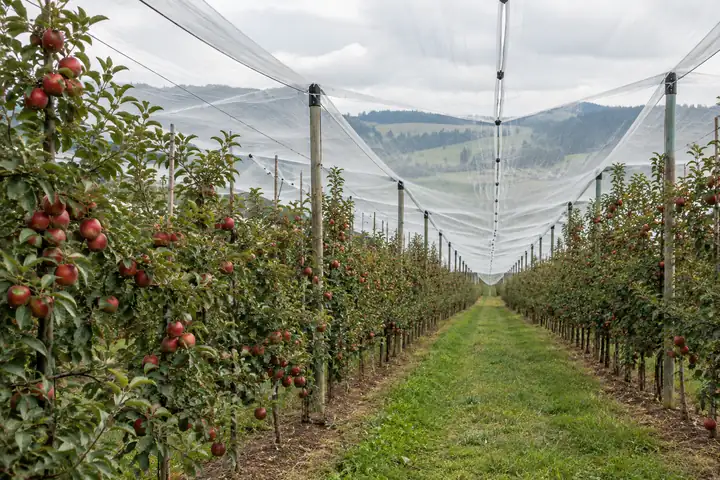
A single hailstorm can destroy a season's fruit in minutes and scar trees for years. Anti-hail netting is the most reliable protection for high-value orchards and vineyards, and it increasingly doubles as protection against sunburn, birds and wind.
How anti-hail nets work
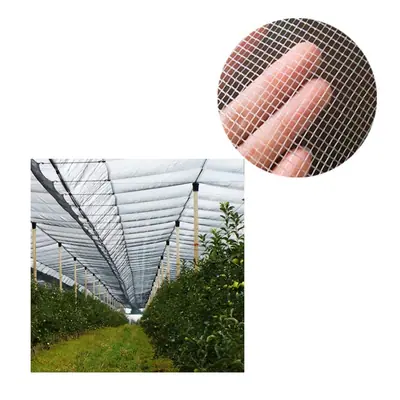
The net is stretched over the canopy on a structure of poles, cables and plaquettes, or draped directly over rows. Hailstones strike the net, lose their energy and roll off into the alleys. Because the mesh is open, light, air and rain still reach the trees.
Material: HDPE vs PP
- HDPE (high-density polyethylene) monofilament is the industry standard: tough, flexible in cold weather and highly UV-resistant when stabilised.
- PP (polypropylene) is used for some lighter nets and shade cloth; it is cost-effective but generally shorter-lived in full sun.
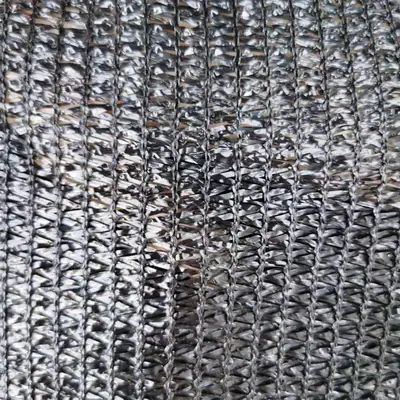
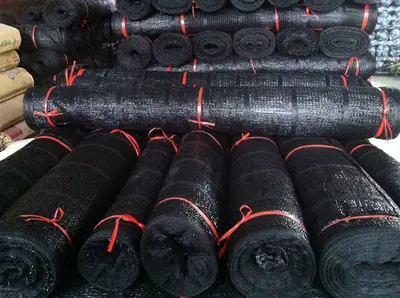
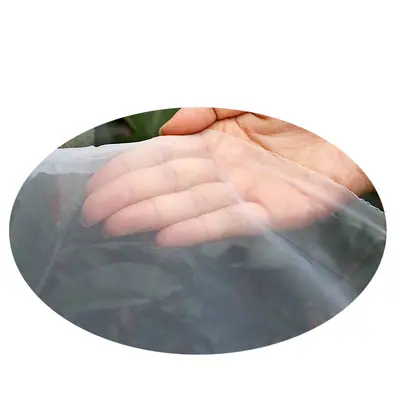
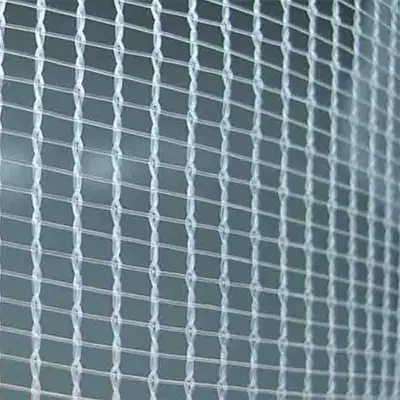
Our HDPE White Large Hail protection Net Anti Hail for apple and 100% Virgin Plastic Anti-Hail Mesh Net for Greenhouse are made from virgin, UV-stabilised HDPE.
Colour: white, crystal, black or grey?
| Colour | Light reduction | Typical use |
|---|---|---|
| White / crystal | Lowest | Red apple varieties and regions with limited sunlight; helps fruit colouring |
| Grey | Medium | Balance between light and shade |
| Black | Highest | Hot, high-sunlight regions; also the longest-lasting colour |
Growers of red apples often choose white or crystal netting to keep colour development close to uncovered trees.
Mesh, weight and width
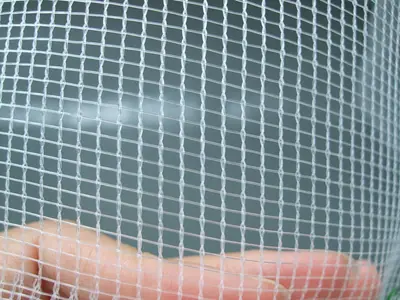
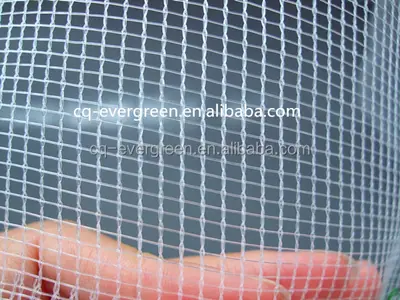
Anti-hail nets are typically woven or knitted with mesh openings of a few millimetres — small enough to stop hailstones, large enough to keep air moving. Heavier nets (more grams per m²) last longer and resist wind damage. Widths are chosen to match row spacing so that one width covers a row or a pair of rows; rolls are cut to length.
Installation systems
- Flat or overhead systems span the whole orchard on poles and cables, with nets opened in spring and closed in autumn.
- Single-row (drape) systems place nets directly over each row; simpler but more labour at harvest.
- Hood or "V" systems let hail slide into the alley through gaps along the ridge.
Reinforced edges, eyelets and plaquettes make installation easier and spread loads; ask us for edge reinforcement on your order.
Shade nets and insect nets
The same family of materials protects crops in other ways:
- Shade nets are specified by shading percentage — 30% for most vegetables in strong sun, 50–60% for nurseries and shade-loving crops, 70–80% for livestock and people. See our Agricultural Sun Shade PP Polypropylene Black UV.
- Insect nets use much finer mesh to keep pests out of greenhouses and tunnels, reducing pesticide use.
Frequently asked questions
How long does an anti-hail net last?
Service life depends on UV dose, wind and handling. UV-stabilised HDPE nets are designed for many seasons of outdoor use; black nets generally last longest.
Does hail netting reduce yield?
Light reduction can slightly affect fruit colour, which is why white or crystal nets are preferred for red varieties. In return, nets prevent hail losses and can reduce sunburn.
Can anti-hail nets protect against birds?
Yes — fully enclosed systems also keep birds out, which is valuable for cherries and grapes.
Do you cut nets to size?
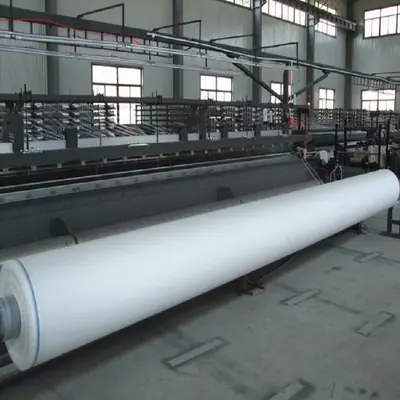
Yes, we supply nets cut to your width and length, with reinforced edges on request.