Key takeaways
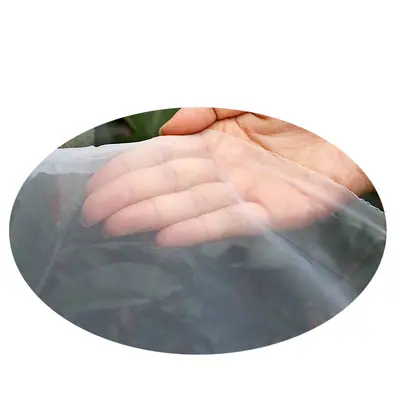
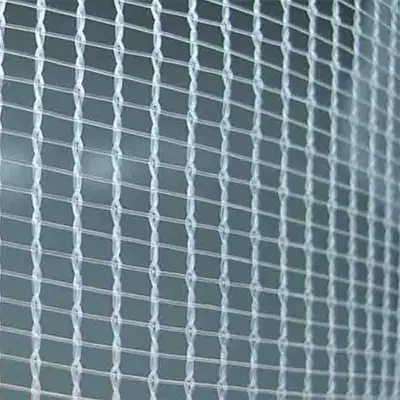
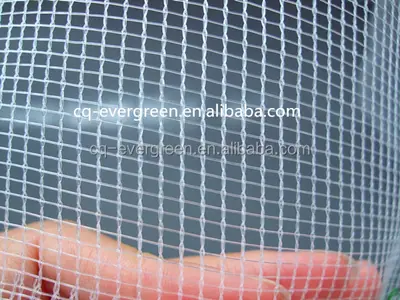
- Hail netting is a UV-stabilized HDPE mesh with holes of roughly 3–8 mm that stops hailstones while passing light, air and rain.
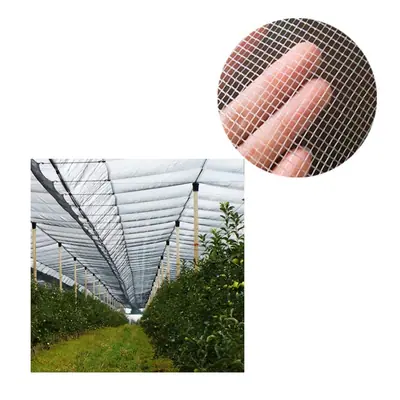
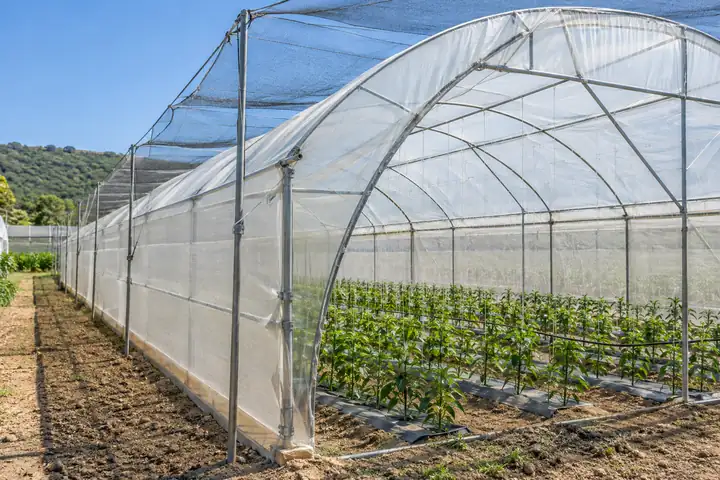
- For gardens, mount the net on a sloped frame above the plants so hail rolls off instead of piling up.
- Greenhouses need hail protection on the roof: external netting over film or glass, or a rigid hard plastic mesh on vulnerable panels.
- White nets keep the most light; black nets last longest and add shade.
Hail netting is a strong, UV-stabilized HDPE mesh with openings of roughly 3–8 mm that stops hailstones before they hit plants, fruit or greenhouse roofs, while still letting light, air and rain through. For gardens, it works best stretched on a sloped frame above the crop so hail bounces and rolls off; for greenhouses, it is mounted over the roof or replaced by rigid hard plastic mesh where impact protection is critical.
Commercial orchards have used anti hail netting for decades, and the same materials now protect vegetable gardens, nurseries and small greenhouses. This guide focuses on gardens and greenhouses; for orchard systems, colors and HDPE vs PP materials in depth, see our anti-hail net buying guide.
How does hail netting protect plants?
Hailstones are, by definition, ice pellets 5 mm (about 0.2 in) or larger, and they fall at high speed: a 2.5 cm (1 in) stone falls at roughly 40 km/h (25 mph), and larger stones much faster. Hail netting for plants works in two ways:
- It intercepts the stone. The mesh is smaller than most hailstones, so they cannot pass through.
- It absorbs the energy. A flexible net stretches on impact, slowing the stone before it can reach leaves or fruit, then sheds it to the side.
Light and air still pass through the open mesh, so plants grow almost normally. A typical white anti hail net reduces light by roughly 8–15%; black nets shade more, often 15–25%.
Hail net specifications
| Spec | Typical range | Notes |
|---|---|---|
| Material | HDPE monofilament, UV stabilized | Flexible in cold weather; long outdoor life |
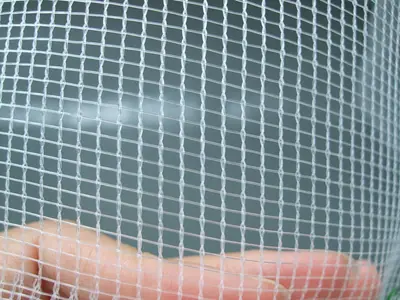
| Mesh opening | 3 × 7 mm to 4 × 8 mm common; up to 8 × 8 mm | Smaller holes stop smaller hail |
| Weight | 35–60 g/m² | Heavier nets resist tearing and wind |
| Light reduction | White 8–15%; grey 12–18%; black 15–25% | Approximate; depends on mesh and thread |
| Widths | 2–6 m for gardens; up to 10–12 m for orchards | Fewer seams with wider rolls |
| Edge | Reinforced selvedge or tape with eyelets | Spreads load at fixing points |
Our HDPE White Large Hail protection Net Anti Hail for apple is a white HDPE net for orchards and large gardens; it can be cut to width and length with reinforced edges.
Hail netting for gardens: how to set it up
Garden hail protection fails most often when the net sags onto plants or collects a load of ice. Follow these rules:
1. Keep the net off the plants
Mount the net at least 30–50 cm (12–20 in) above the tallest foliage. A net resting on leaves transfers the impact straight through, and fruit touching the net will bruise.
2. Give it a slope
Hail accumulates on flat nets. A pitch of about 15–30° (or a ridge in the middle, like a tent) lets stones roll off to the sides. On wide structures, leave a gap or slit along the low edge so ice can fall through rather than build up.
3. Use a frame strong enough for a load
During a heavy storm, hail can pile up several centimeters deep. Ice weighs about 900 kg/m³ when solid; a 2 cm (0.8 in) layer of loose hailstones can easily weigh 10 kg/m² or more. A 3 × 6 m garden net could briefly carry 180 kg (400 lb). Use posts no more than 2.5–3 m apart and keep the slope steep enough to shed ice.
4. Secure all edges
Wind usually arrives with hail. Fix the net every 50–60 cm along the frame with clips or ties (the same hardware described in how to secure shade cloth), and ground or weight the lower edges.
Quick options for vegetable gardens
| Setup | Cost / effort | Best for |
|---|---|---|
| Hoops over raised beds with net and clamps | Low | Salads, brassicas, peppers, strawberries |
| Ridge frame (tent shape) over rows | Medium | Tomatoes, vine crops, small orchards |
| Permanent post-and-cable canopy | Higher | Market gardens, berry fields, nurseries |
| Throw-over net on demand | Lowest | Emergency cover when a storm is forecast |
A throw-over net is better than nothing, but it rests on plants and can still let damage through. Permanent or seasonal frames are far more reliable in hail-prone regions.
Greenhouse hail protection
Greenhouses are especially vulnerable: polyethylene film punctures, older glass breaks, and thin polycarbonate can crack under large hail. Options for greenhouse hail protection include:
External hail netting
A hail net stretched over the roof on standoffs or a separate frame takes the impact before stones reach the glazing. It also adds a little shading in summer. Mount it with a gap of at least 20–30 cm above the roof so the net can deflect without touching the covering, and make sure snow and ice can slide off.
Hard plastic mesh
Hard plastic mesh is a rigid, extruded plastic grid (typically HDPE or PP) that does not need tensioning. Unlike a flexible net, it keeps its shape, so it can be fixed directly over roof vents, small greenhouses, cold frames and propagation houses. It is also used to protect vents, skylights and equipment. Our hard plastic mesh for hail protection is designed for this kind of panel-by-panel protection.
| Feature | Flexible hail net | Hard plastic mesh |
|---|---|---|
| Installation | Needs frame and tension | Fixes directly to frame or rafters |
| Spans | Large areas, cut from rolls | Smaller areas, panels and vents |
| Weight | 35–60 g/m² | Considerably heavier per m² |
| Behavior on impact | Stretches and absorbs | Rigid; spreads load across the grid |
| Best for | Gardens, orchards, large roofs | Vents, cold frames, small greenhouses |
Insect and hail nets combined
Greenhouse vents are often fitted with insect netting such as 100% Virgin Plastic Anti-Hail Mesh Net for Greenhouse. Fine insect mesh will also stop hail, but it is less robust against large stones than purpose-made hail netting. In hail-prone areas, a coarse hail net or hard mesh outside and a fine insect screen inside gives the best of both. See the insect netting guide for mesh selection.
White, crystal or black hail netting?
- White or crystal nets transmit the most light. They suit vegetables, flowers and fruit that need color development.
- Black nets last longest outdoors and add useful shade in hot climates, but reduce light more.
- Grey is a compromise.
If you need substantial shading as well, a hail net is not a substitute for proper shade cloth; see what percentage shade cloth to use.
Caring for hail netting
- Close or remove nets in winter where heavy snow is likely; snow loads can be far greater than hail.
- Roll nets up between seasons on permanent systems; this protects against UV and wind.
- Inspect for wear at fixing points and along cables each spring.
- Clear accumulated hail promptly after a storm if it has not rolled off.
Bulk and custom hail netting
EGP manufactures agricultural netting in Yantai, China, for distributors, garden retailers, nurseries and orchard installers. We supply hail netting by the roll or cut to size, with reinforced edges on request. Browse the Hail, Shade & Insect Nets range or contact us with your width, length, color and quantity.
Frequently asked questions
Does hail netting really work for gardens?
Yes, when it is mounted on a frame above the plants with a slope that sheds hailstones. A net draped directly on plants offers some protection but can still let impact through to leaves and fruit. Well-installed nets prevent the large majority of hail damage.
What size mesh do I need for hail netting?
Most hail nets have openings around 3 × 7 mm to 4 × 8 mm, which stops typical hailstones (5 mm and larger) while keeping good light and airflow. Finer mesh stops smaller stones but shades more and catches more wind.
Can hail netting protect a greenhouse?
Yes. An external hail net mounted over the roof, or rigid hard plastic mesh over vents and small structures, protects film, glass and polycarbonate from impact. Leave a gap between net and glazing so the net can flex, and remove or open it before heavy snow.
What is hard plastic mesh used for?
Hard plastic mesh is a rigid grid used where a flexible net is impractical: greenhouse vents, cold frames, small structures and equipment. It needs no tensioning and spreads hail impact across the grid.
Does hail netting reduce plant growth?
Only slightly. White hail netting typically reduces light by around 8–15%, which most crops tolerate well, and the mild shading can reduce sunburn in hot summers. Black netting shades more and is better suited to hot, bright climates.
Will hail netting also keep out birds and insects?
Hail netting keeps out birds when it fully encloses the crop, but its mesh is too coarse to stop most insects. For pest exclusion you need dedicated insect netting with much smaller holes.