Key takeaways
- A commonly cited rule: about 600 standard sandbags build a wall 100 ft long and 1 ft high (about 200 bags per 10 m at 30 cm high).
- Bags needed rise quickly with height: about 2,100 for 2 ft and 4,500 for 3 ft over 100 ft.
- A standard 14 x 26 in bag filled half to two-thirds weighs about 35–40 lb (16–18 kg).
- One short ton (2,000 lb) of dry sand is about 20–22 cu ft and fills roughly 50–57 standard sandbags.
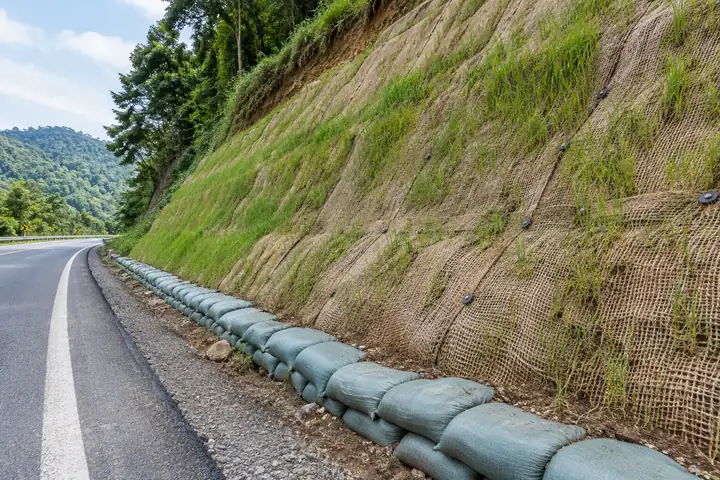
For a pyramid-style flood wall, plan on about 600 standard sandbags for every 100 ft (30 m) of wall 1 ft (30 cm) high — a figure widely cited from US Army Corps of Engineers sandbagging guidance. Because the base of a safe wall is about three times its height, bag numbers grow much faster than height: roughly 2,100 bags for 2 ft and 4,500 bags for 3 ft over the same 100 ft. Each standard 14 x 26 in bag holds about 35–40 lb (16–18 kg) of sand, so 600 bags need around 10–12 tons of sand.
Skip the maths: our free sandbag calculator does this calculation for you in seconds.
Below you will find the formula behind those numbers, worked examples, and the bag weight and sand volume figures you need to order sand and bags. For building technique, see how to stack sandbags for flooding.
How many sandbags do I need for a flood wall?
The quick reference table
| Wall height | Base width | Bags per 100 ft (30.5 m) | Bags per 10 m | Sand needed per 100 ft (approx.) |
|---|---|---|---|---|
| 1 ft (30 cm) | 3 ft (0.9 m) | 600 | ~200 | 10.5–12 short tons (9.5–11 t) |
| 2 ft (60 cm) | 6 ft (1.8 m) | 2,100 | ~690 | 37–42 short tons (33–38 t) |
| 3 ft (90 cm) | 9 ft (2.7 m) | 4,500 | ~1,480 | 79–90 short tons (72–81 t) |
Assumptions: standard 14 x 26 in (36 x 66 cm) bags filled half to two-thirds (35–40 lb / 16–18 kg), pyramid placement with a base three times the height, and a top about one bag wide. Real numbers vary with bag fill, tamping and ground conditions, so add 10–15% spare.
Walls taller than about 3 ft (90 cm) need very large quantities of bags and put serious loads on the structure; at that scale talk to emergency services or an engineer, and consider bulk-bag barriers instead (see alternatives to sandbags).
Sandbag calculator formula
The table follows a simple pattern. With length L and height H in feet:
Bags = 1.5 × L × H × (3H + 1)
Check it against the reference figures:
- L = 100, H = 1: 1.5 × 100 × 1 × (3 + 1) = 600
- L = 100, H = 2: 1.5 × 100 × 2 × (6 + 1) = 2,100
- L = 100, H = 3: 1.5 × 100 × 3 × (9 + 1) = 4,500
In metric, with L and H in meters:
Bags ≈ 16 × L × H × (9.8H + 1)
Example: 10 m long, 0.3 m high: 16 × 10 × 0.3 × (2.94 + 1) ≈ 189, i.e. roughly 200 bags.
The logic: a pyramid's cross-section grows with the square of its height (wider base and more layers), and it works out to about three standard bags per square foot of wall cross-section.
Worked example: a 40 ft wall, 2 ft high
- Bags = 1.5 × 40 × 2 × (3 × 2 + 1) = 1.5 × 40 × 2 × 7 = 840 bags
- Add 15% spare: 840 × 1.15 ≈ 970 bags — order 1,000.
- Sand: 840 bags × 35–40 lb = 29,400–33,600 lb ≈ 15–17 short tons (about 13–15 metric tonnes).
Doorways and garage doors
Small barriers are usually a single-width stack rather than a pyramid:
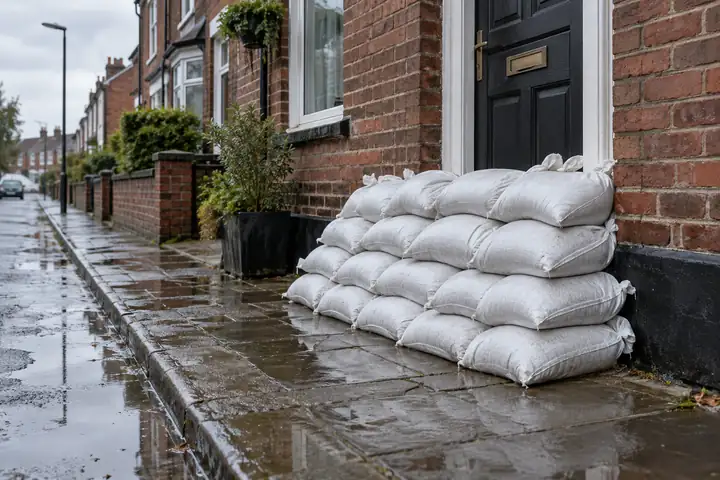
- Standard 3 ft (0.9 m) doorway, three layers (about 1 ft high), extending a little past each side of the frame: roughly 15–25 bags.
- 16 ft (4.9 m) double garage door, two to three layers: roughly 50–100 bags.
These assume plastic sheeting behind the bags; without it, add a layer.
How much does a sandbag weigh?
A standard 14 x 26 in sandbag filled half to two-thirds with dry sand weighs about 35–40 lb (16–18 kg). Filling it full can push it past 50 lb, and wet sand adds more, which is why filling guidance stops at two-thirds.
Smaller and larger bags are sold or specified by target weight. Using dry sand at about 100 lb per cubic foot (1,600 kg/m³):
| Filled weight | Metric | Approx. sand volume | Typical use |
|---|---|---|---|
| 50 lb sandbag | 22.7 kg | 0.5 cu ft (14 L) | Large bags, heavy ballast — two hands, short carries |
| 40 lb sandbag | 18.1 kg | 0.4 cu ft (11 L) | Upper end of a standard flood bag |
| 25 pound sandbags | 11.3 kg | 0.25 cu ft (7 L) | Tent and canopy weights, sign bases |
| 20 lb sandbag | 9.1 kg | 0.2 cu ft (5.7 L) | Light ballast, pool covers, truck beds |
| 10 lb sand bags | 4.5 kg | 0.1 cu ft (2.8 L) | Mini bags, drain covers, small weights |
Densities vary: dry sand is roughly 90–100 lb/cu ft, and damp or compacted sand can be heavier. If precise ballast matters — for example tent weights — weigh a sample bag. See sandbags for tents, pools and trucks for ballast uses.
How many cubic feet is a 50 lb bag of sand?
A 50 lb bag of sand is about 0.5 cubic feet (about 14 liters) for typical dry sand. Retail bagged sand is often labeled in exactly these terms. That means:
- 2 bags ≈ 1 cu ft
- 54 bags ≈ 1 cubic yard (27 cu ft)
How much is a ton of sand?
In volume terms, a short ton (2,000 lb) of dry sand is about 20–22 cubic feet, or roughly 0.75–0.8 cubic yards. A metric tonne (1,000 kg) is about 0.63–0.69 m³. The exact figure depends on grain size, compaction and moisture, so ask your sand supplier for their bulk density.
How many sandbags one ton fills:
| Sand quantity | Bags at 35 lb (16 kg) | Bags at 40 lb (18 kg) |
|---|---|---|
| 1 short ton (2,000 lb) | ~57 | 50 |
| 1 metric tonne (1,000 kg) | ~62 | ~55 |
| 10 short tons | ~570 | 500 |
Sand is sold by the ton or by the cubic yard depending on the yard; convert carefully, and allow some waste for spillage at the filling station.
What does 1 ton of sand look like?
One ton of sand is smaller than most people expect:
- A cube about 2.7–2.8 ft (about 0.85–0.9 m) on each side.
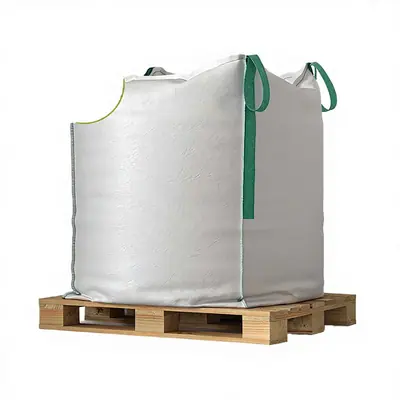
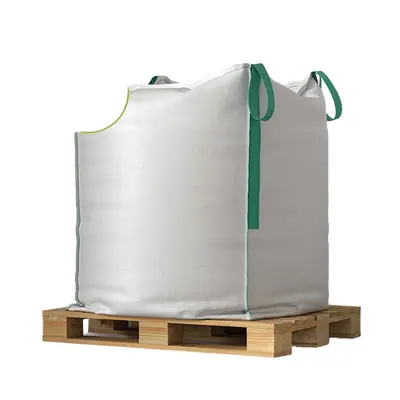
- About the contents of one standard 1-tonne bulk bag with a 35 x 35 in (90 x 90 cm) base, filled to roughly 31 in (80 cm) high.
- A low pile you could step over in two strides.
It is also heavier than it looks: a ton of sand exceeds the rated payload of many half-ton pickup trucks, so check your vehicle's payload rating before loading. Sand yards often deliver in one-ton bulk bags; a bag such as our FIBC Bulk Jumbo Big Bag 1 Ton PP Woven Food Grade Super is designed for that kind of load.
Filled sand bags vs pre filled sandbags vs empty bags
You can source bags three ways:
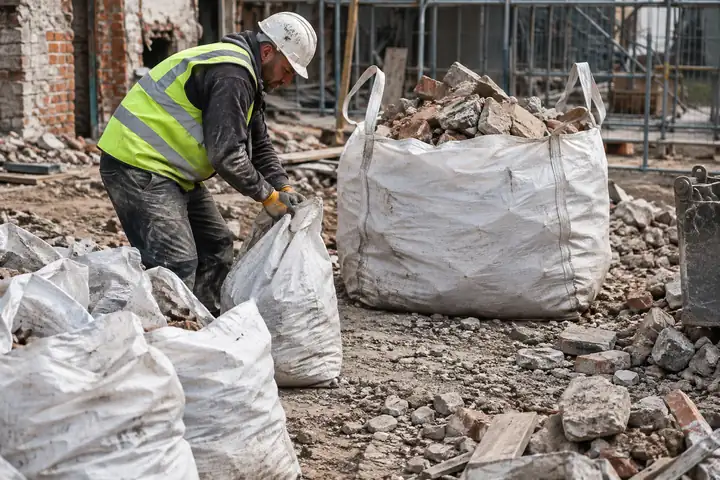
- Empty bags plus loose sand — the cheapest per bag by far and the standard for municipalities and contractors. Requires labor and a filling site.
- Pre filled sandbags — sold by hardware stores and flood-supply firms, ready to place. Convenient for small jobs and people who cannot shovel, but heavy to ship and much more expensive per bag.
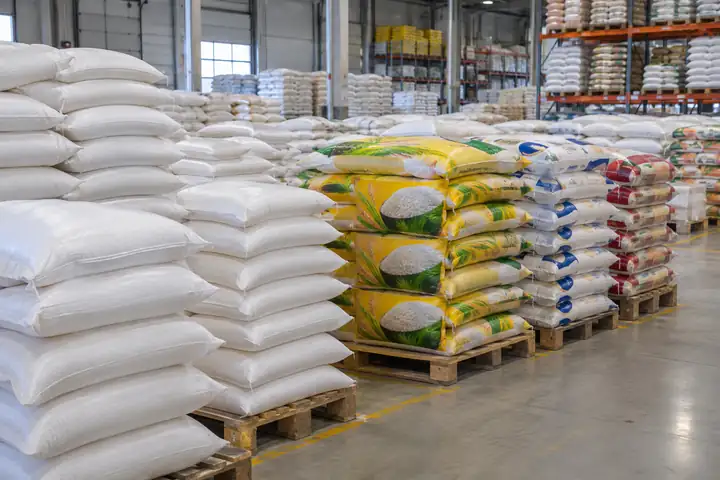
- Filled sand bags stockpiled in advance — some agencies and businesses fill bags before the season and store them on pallets under cover. Use UV-stabilized woven bags so they do not weaken in a storage yard, and keep them off the ground.
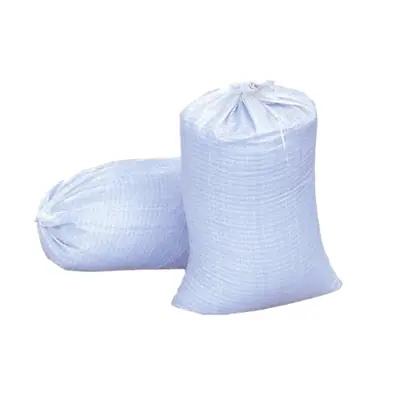
For large stock programs, factory-direct empty bags such as our UV Stabilized PP Woven Bag with Top Drawstring for Sand or the heavier Heavy Duty Moisture Proof PP Woven Bag with Reinforced keep the cost per bag low. Our sand bags buying guide covers fabric weight, UV ratings and colors.
Planning checklist
- Measure the length of wall needed and the target height (aim slightly above the expected flood level).
- Calculate bags with the formula; add 10–15%.
- Calculate sand: bags × 35–40 lb (16–18 kg).
- Plan people: filling is usually the bottleneck, so set up several filling points.
- Stock plastic sheeting, shovels, gloves and a pump.
EGP manufactures empty woven polypropylene sandbags in Yantai, China, and supplies distributors, municipalities and contractors factory-direct with custom sizes, colors and printing. Browse our PP Woven Sacks range or request a quote.
Frequently asked questions
How many sandbags do I need for 100 feet?
For a pyramid wall 1 ft high, about 600 standard sandbags per 100 ft is the commonly cited figure. For 2 ft high, plan around 2,100, and for 3 ft around 4,500. Add 10–15% spare.
How many sandbags does it take to fill a ton of sand?
One short ton (2,000 lb) of dry sand fills about 50–57 standard sandbags filled to 35–40 lb each. A metric tonne fills roughly 55–62.
How much does a full sandbag weigh?
A standard 14 x 26 in sandbag filled half to two-thirds weighs about 35–40 lb (16–18 kg). Filled to the top, or with wet sand, it can exceed 50 lb, which is harder to handle safely.
How many sandbags do I need for a door?
A single 3 ft doorway with a barrier about 1 ft high typically takes 15–25 bags, with plastic sheeting behind them. A double garage door can take 50–100.
Is there a simple sandbag calculator formula?
Yes: bags = 1.5 × length (ft) × height (ft) × (3 × height + 1). It reproduces the common 600, 2,100 and 4,500 bags per 100 ft for 1, 2 and 3 ft walls.