Key takeaways
- The main alternatives to sandbags are sandless (absorbent) sandbags, water-filled barriers, door and flood boards, and sand-filled bulk "ton" bags placed by machine.
- Sandless bags are fast and light to store but mostly single-use and absorb much less in saltwater.
- Water-filled tubes are reusable but need flat ground and can slide or roll if overtopped.
- For long lines, one 1-tonne bulk bag replaces roughly 55–60 standard sandbags, but needs lifting equipment.
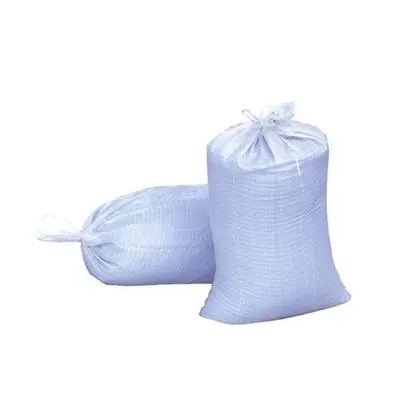
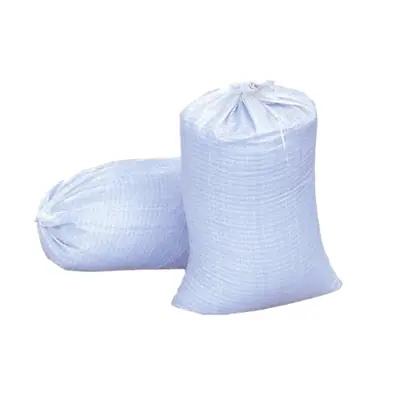
The best alternatives to sandbags are sandless (super-absorbent) sandbags for quick small jobs, water-filled barriers for reusable lines on flat ground, flood boards and door barriers for individual openings, and sand-filled bulk "ton" bags placed by machine for long or urgent defenses. Each beats traditional sandbags in some situations and loses in others: none is watertight, and all depend on correct placement. Traditional woven sandbags remain the most flexible, cheapest-to-stock option where labor and sand are available.
If you are sticking with sandbags, see how to stack sandbags for flooding and how many sandbags do I need.
Why look for a substitute for sandbags?
Sandbags have real drawbacks:
- Labor: filling 600 bags for a 100 ft, 1 ft high wall takes a team many hours.
- Sand supply: sand runs short when a whole region floods at once.
- Weight and handling: 35–40 lb (16–18 kg) per bag adds up to strain injuries.
- Disposal: bags that sat in floodwater are usually treated as contaminated waste.
A good substitute for sandbags should address at least one of these without creating a bigger problem.
Comparison: sandbag alternatives at a glance
| Option | Deployed weight | Setup | Reusable? | Best for | Main limitations |
|---|---|---|---|---|---|
| Woven PP sandbags | 35–40 lb (16–18 kg) each | Slow; needs sand and crews | Sometimes, if not contaminated | Any shape, uneven ground, emergencies | Labor, sand supply |
| Sandless sandbags | Light until activated | Fast; soak in water | Usually single-use | Doorways, small gaps, households | Weaker in saltwater; disposal |
| Water-filled tubes / water bags | Very heavy when filled | Moderate; needs water supply | Yes | Long straight lines on flat paved ground | Slide or roll if overtopped; puncture |
| Flood boards / door barriers | Light panels | Very fast | Yes | Doors, garage doors, gates | Must be measured and fitted in advance |
| Bulk ton bags (FIBC) filled with sand | ~2,200 lb (1,000 kg) each | Fast with machinery | Sometimes | Long defenses, breach repair, sites | Need loader/crane, access, liners |
| Earth-filled wire-mesh containers | Very heavy | Machine-filled | Partly | Long-term or semi-permanent lines | Cost, equipment, footprint |
| DIY (trash bags, sheeting, timber) | Varies | Fast | No | Last-resort small openings | Weak, easily punctured |
Sandless sandbags
Sandless sandbags are fabric sleeves filled with a super-absorbent polymer (the same family of material used in diapers). Dry, they weigh about a pound and stack flat. Soaked in water for a few minutes — or left to absorb floodwater — they swell into a heavy gel-filled "bag".
Pros - Easy to store and carry; no sand pile, shovels or filling crew. - Fast for doorways, toilets, drains and small gaps. - Useful for people who cannot lift full sandbags.
Cons - Saltwater sharply reduces absorption, so they perform poorly in coastal storm surge or brackish water. - Mostly single-use: once swollen, they are heavy, slippery and slow to dry out. - Gel-filled bags are lighter and less rigid than a sand-filled bag of the same size and can be pushed out of place by fast-moving water. - Disposal follows local rules, especially after contact with floodwater.
Verdict: a good household tool for small openings and for indoor leaks; not a replacement for a proper wall.
Water bags for flooding and water-filled barriers
Water bags for flooding range from small water-filled "flood bags" for doorways to long tubes and baffled barriers several feet tall that are filled with a hose or pump on site.
How they work: the weight of water inside (about 62 lb per cubic foot, 1,000 kg/m³) holds the barrier down against the floodwater. Fresh water is roughly two-thirds the weight of the same volume of sand, so a water barrier needs more volume to achieve the same ballast.
Pros - Reusable many times if not damaged. - Rapid to deploy for a trained crew; fills from the flood source or a hydrant. - Light and compact to store and transport when empty.
Cons - Need flat, smooth, clean ground. On grass, gravel or slopes, water seeps underneath and the barrier can slide. - If the flood rises close to or above the rated height, they can roll or float. Follow the manufacturer's rated maximum water depth, which is usually below the barrier height. - A single puncture from debris can empty a section. - Corners and tie-ins to walls are weak points.
Verdict: good for planned defenses on paved areas such as driveways, parking lots and town streets, where crews train and pre-measure lines.
Flood bags and door barriers
"Flood bags" is a loose term — retailers use it for sandless bags, small water-filled bags or pre-filled sandbags. Read the product description to see which you are buying.
For individual buildings, the most effective non-sandbag option is often a purpose-made flood board or door barrier: a panel that seals into a frame or clamps against the door jambs. Combined with air-brick or vent covers and non-return valves on drains, these handle shallow flooding without a single bag. They must be measured, fitted and tested before the flood season.
Bulk bags as flood barriers (ton bags)
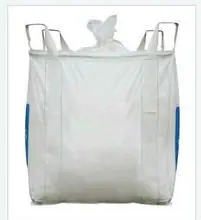
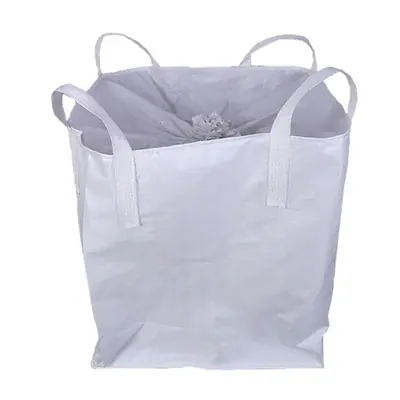
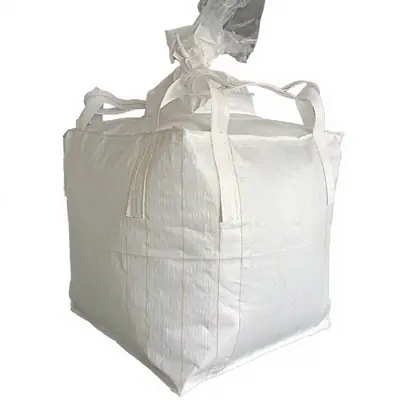
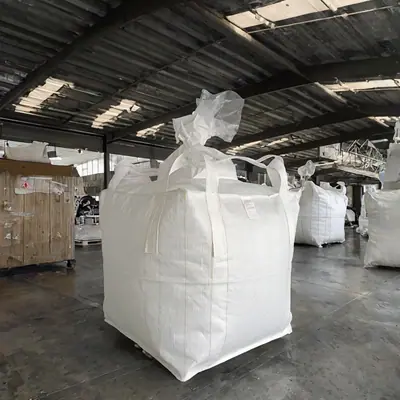
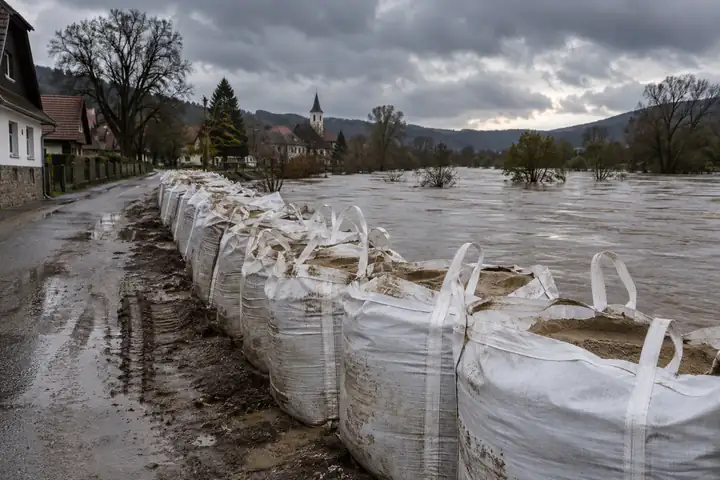
A sandbag flood barrier does not have to be built one 40 lb bag at a time. Many authorities and contractors use bulk bags as flood barriers: one-tonne woven polypropylene FIBCs ("ton bags" or super sacks) filled with sand or gravel and placed by loader, excavator, telehandler or crane.
Why ton bags work
- One bag replaces many sandbags. A 1,000 kg (2,200 lb) bag holds about as much sand as 55–60 standard sandbags.
- Speed: with sand on site and a machine, a crew can place a long line quickly — useful for closing a gap, protecting a substation or repairing a breached embankment.
- Fewer injuries: machines lift the weight, not people.
How to use them safely and effectively
- Rated bags only. Use bags with a known safe working load and safety factor and never exceed it. See our FIBC safety factor guide.
- Lift only by the loops, with all loops engaged and appropriate rated equipment. Never stand under or beside a suspended bag.
- Fill on the ground at or near the final position when possible to reduce lifting.
- Seal the gaps. Bulk bags are rounded, so water passes between them. Use a plastic membrane on the water side, place standard sandbags in the gaps, or stagger a second row.
- Mind the ground. Soft or saturated ground may not take the load of machinery or heavy bags.
- UV-stabilized fabric for anything left in place for weeks — for example our Outdoor UV Stabilized FIBC Bag Weather Resistant.
Flat-bottom, open-top bags such as our Strong PP Fabric 1 Ton Breathable Flat Bottom FIBC Jumbo are the usual choice: fast to fill with a loader bucket, and there is no need for a discharge spout. Our how to choose an FIBC bulk bag guide explains sizes and loops. Browse the FIBC Bulk Bags range for options.
Limitations: you need site access, lifting equipment, trained operators and a sand supply. Bulk bags are not a household solution.
Earth-filled wire-mesh containers
Collapsible wire-mesh containers lined with geotextile and filled with soil by machine are used for longer-term flood walls and military defenses. They are strong and fast to fill with equipment, but expensive and bulky, and the fill must be removed by machine afterward.
DIY alternatives to sandbags
If you have no sandbags and a flood is minutes away, these can help a little:
- Heavy trash bags filled one-third with soil or sand, double-bagged and tied. Weaker than woven bags and easily punctured, but better than nothing.
- Pillowcases or feed sacks filled with soil — any tight-woven sack works; woven polypropylene feed and grain sacks are effectively sandbags already.
- Plastic sheeting and timber: screw or wedge a board across a doorway and seal with sheeting weighted down at the base.
- Towels and blankets only absorb; they will not stop flowing water.
Do not use anything that can float away or block drains downstream, and do not put yourself at risk building a barrier as water rises.
Which option should you choose?
- Household, shallow street flooding: flood boards and vent covers, backed by a stock of sandless bags or 20–30 sandbags.
- Business or institution with a known flood line: pre-measured water-filled barriers or flood boards, plus sandbags for tie-ins and gaps.
- Municipality or emergency service: stock empty woven sandbags in quantity (cheapest to store per unit of protection), plus bulk bags for machine-placed lines and breach repair.
- Contractor on a site: bulk bags and sandbags from the same supplier.
Sandbags and bulk bags complement each other: bulk bags for length and speed, sandbags for closing gaps and following uneven ground. For general-purpose sandbags see our UV Stabilized PP Woven Bag with Top Drawstring for Sand; for a lined bag that keeps fill dry in storage, our Waterproof Lined PP Woven Bag with Bottom Gusset.
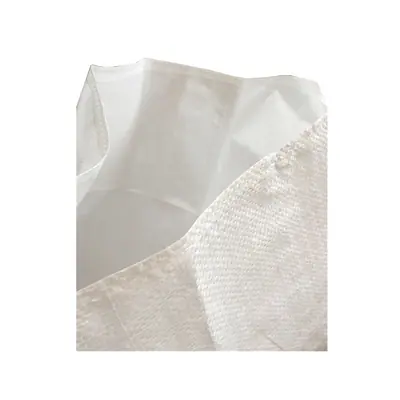
EGP manufactures woven polypropylene sandbags and FIBC bulk bags in Yantai, China, for municipalities, distributors and contractors, with custom sizes, UV packages and printing. See our PP Woven Sacks range or request a quote.
Frequently asked questions
What can I use instead of sandbags?
Common alternatives are sandless absorbent bags, water-filled flood barriers, purpose-made door barriers or flood boards, and sand-filled bulk bags placed by machine. In an emergency, double-bagged trash bags filled with soil and plastic sheeting can help with small openings.
Do sandless sandbags work?
They work for small openings and indoor leaks, and they are easy to store and carry. They are mostly single-use, lighter than real sandbags once swollen, and absorb much less in saltwater, so they are a poor choice for coastal flooding.
Are water-filled flood barriers better than sandbags?
They are faster to deploy and reusable, but only on flat, clean ground and within their rated water depth. On uneven ground, or if overtopped, sandbags are usually more reliable.
How many sandbags does a bulk bag replace?
A 1-tonne bulk bag holds roughly as much sand as 55–60 standard 35–40 lb sandbags. It must be placed with rated lifting equipment and the gaps between bags sealed with sheeting or sandbags.
Can I use bulk bags as flood barriers around my home?
Usually not without machinery and good access. Bulk bags are best suited to municipalities, utilities and contractors who can fill and place them safely.