Key takeaways
- A multiwall paper bag is two or more plies of sack kraft paper, sometimes with a film or coated barrier ply, formed into a valve or open-mouth sack.
- Typical industrial bags use 2–4 plies of about 70–100 g/m² kraft for 20–50 kg fills.
- Main styles: sewn open mouth, pinch bottom, pasted valve and block bottom.
- Choose paper-poly laminated bags (kraft over woven PP) when you need paper's look with far higher drop and tear strength.
Multiwall paper bags are industrial sacks made from two or more layers ("plies") of strong sack kraft paper, usually 70–100 g/m² each, glued or sewn into an open-mouth or valve bag that typically holds 10–50 kg. Extra plies add strength; a polyethylene film or coated ply adds moisture or grease resistance. They are the standard packaging for flour, sugar, animal feed, seed, cement, chemicals and minerals in many markets.
This guide explains how multiwall bags are built, which styles suit which filling lines, how paper weights are specified, and when a paper-poly laminated bag — kraft paper bonded to woven polypropylene — is the better choice.
How are multiwall bags constructed?
Each multiwall bag is a tube of nested paper plies, closed at the bottom and either open at the top or fitted with a filling valve.
| Component | Typical specification | Purpose |
|---|---|---|
| Outer ply | 70–90 g/m² natural brown or bleached white kraft | Print surface, scuff resistance |
| Inner plies | 1–3 plies of 70–100 g/m² sack kraft (often extensible) | Strength and drop resistance |
| Barrier ply (optional) | PE film or PE-coated paper | Moisture, grease or aroma barrier |
| Bottom closure | Sewn, pinched and hot-melt sealed, or pasted block | Shape and sift resistance |
| Valve (valve bags) | Paper or PE sleeve in one corner | Filling on valve packers |
Extensible sack kraft is paper that can stretch a few percent before breaking, so it absorbs drop energy far better than ordinary kraft. Most modern industrial sacks use it.
Understanding paper weight: g/m² vs US basis weight
In the US, sack paper is often quoted in pounds per 3,000 sq ft ream, which causes confusion with the bag's fill weight. The conversion is:
g/m² = basis weight (lb) × 1.628
| US basis weight | Metric equivalent |
|---|---|
| 40 lb | about 65 g/m² |
| 50 lb | about 81 g/m² |
| 60 lb | about 98 g/m² |
| 70 lb | about 114 g/m² |
So a "50 lb paper feed bag" means a bag that holds 50 lb of feed, while "50 lb kraft" means paper of about 81 g/m². Write both clearly in your specification.
Multiwall bag styles
Sewn open mouth (SOM)
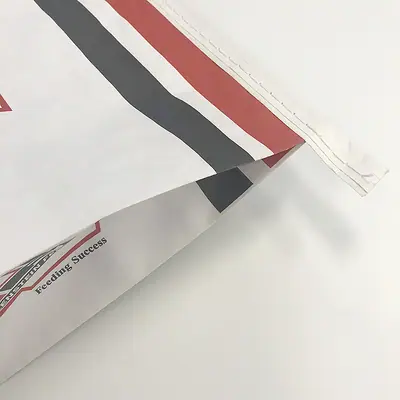
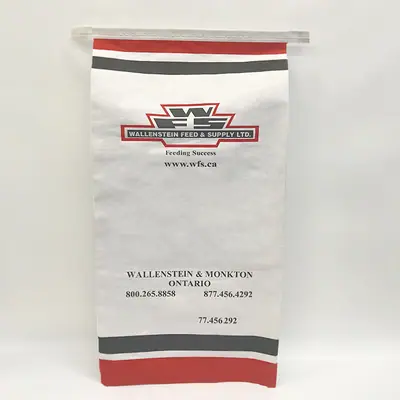
Bottom sewn, often with tape over the stitching; filled from the open top and sewn closed. Simple, inexpensive filling equipment. Common for feed, seed and grain. The needle holes can let fine powders sift unless taped.
Pinch bottom open mouth (PBOM)
Plies are stepped and folded, then sealed with hot-melt adhesive — no needle holes. Cleaner, sift-proof and moisture-resistant; popular for pet food, flour, sugar and premium feed.
Pasted valve and block bottom bags
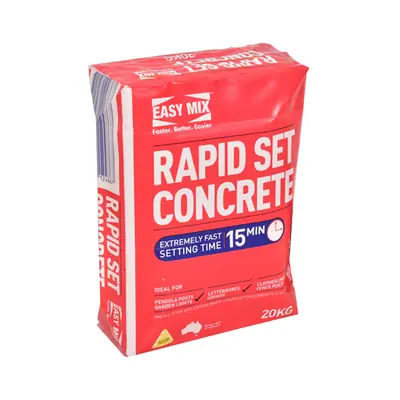
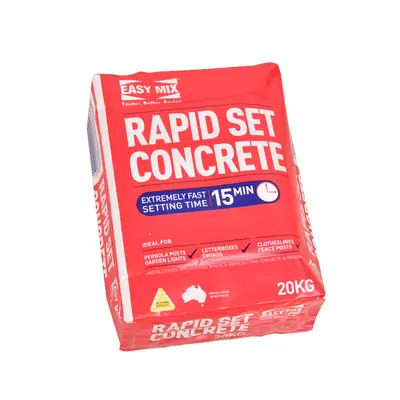
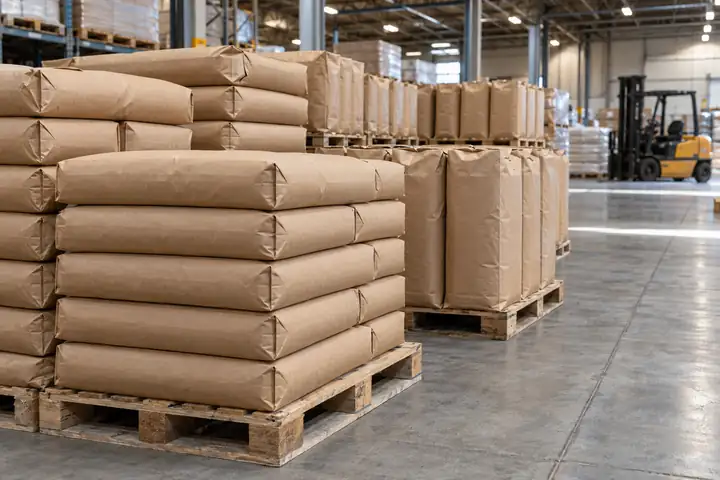
Ends are folded into flat rectangles and glued, with a valve in one corner. Block bottom bags stand upright, stack like bricks and run on high-speed valve packers. They are the standard paper valve bags for cement, mortar, flour and chemicals. Valve and filler compatibility is covered in our valve bag filling machine guide.
Self-opening sacks (SOS) and small paper sacks
Small paper sacks — 1–10 kg flour, sugar, seed and retail produce packs — are usually single- or two-ply flat-bottom bags that open into a square base. They are filled by hand or on simple open-mouth lines and folded or glued closed.
| Style | Typical fill | Filling | Sift resistance | Typical products |
|---|---|---|---|---|
| Sewn open mouth | 20–50 lb / 10–25 kg | Open-mouth bagger + sewing head | Fair (better with tape) | Feed, seed, grain |
| Pinch bottom open mouth | 5–50 lb / 2–25 kg | Open-mouth bagger + heat sealer | Very good | Pet food, flour, sugar |
| Pasted valve / block bottom | 25–50 kg / 50–94 lb | Valve packer | Good–very good | Cement, flour, chemicals |
| Self-opening small sack | 1–10 kg | Manual or simple line | Fair | Retail flour, sugar, produce |
Paper flour bags and paper feed bags
Paper flour bags are typically 2-ply pasted valve or pinch bottom bags in 25 kg, 50 lb or 50 kg sizes, with bleached or natural outer plies. Flour is fine and cohesive, so sift-proof bottoms matter; food-contact paper and adhesives must comply with the rules of your market. For food packaging requirements across materials, see our food packaging bags guide.
Paper feed bags are usually 2–3 ply sewn or pinch bottom bags. A 50 lb paper feed bag for livestock or poultry feed commonly uses two plies plus, for fatty or pelleted feeds, a grease-resistant or PE-coated inner ply to stop oil staining the print. Feed that sits in damp barns benefits from a moisture barrier. For a full comparison of feed sack materials, see our feed bags guide.
Large brown paper sacks
"Large brown paper sacks" usually means one of two things:
- Lawn and leaf bags — typically about 30-gallon, 2-ply natural kraft sacks sold to consumers for yard waste collection and composting.
- Industrial 25–50 kg natural kraft sacks for feed, minerals or charcoal.
Both rely on unbleached kraft for strength. If you are a municipality or retailer sourcing yard-waste sacks in volume, specify ply count, wet strength and dimensions; for heavy contents, compare against woven alternatives in our contractor bags guide.
Paper vs paper-poly laminated bags
The main weakness of all-paper bags is toughness: they tear when snagged, burst when dropped on a corner and weaken when wet. Paper-poly laminated bags solve this by laminating a kraft paper outer layer onto woven polypropylene fabric, often with a PE liner inside.
| Property | Multiwall paper (2–3 ply) | Paper-poly laminated (kraft + woven PP) |
|---|---|---|
| Look and print | Natural kraft, excellent print | Natural kraft, excellent print |
| Tear and puncture resistance | Moderate | High |
| Drop resistance | Moderate (good with extensible kraft) | High |
| Wet strength | Low | Good — woven layer holds when paper is wet |
| Moisture barrier | Needs film ply | Woven + coating/liner; liner option |
| Venting for valve filling | Excellent | Needs micro-perforation |
| Recycling | Paper stream where available | Mixed materials; check local options |
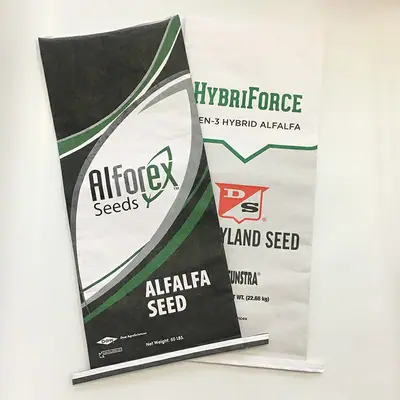
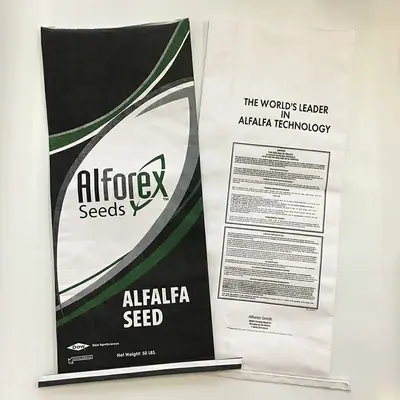
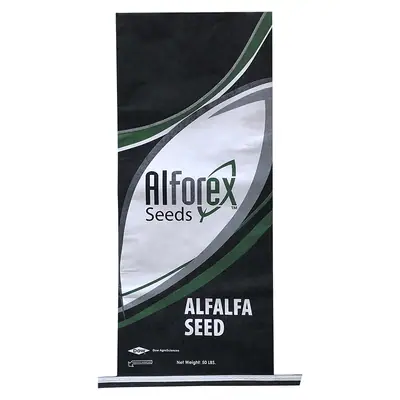
Paper-poly bags are popular for premium seed, alfalfa and forage, specialty feed and export flour. Examples from our range are the Custom Printed Paper-poly Bag PP Woven Lined Kraft Paper and the Paper Plastic Composite Sewn Side Alfalfa Seed Packaging; for retail visibility, the White Kraft Paper PP Side Gusset Bags with Transparent adds a window. For heavier industrial fills, kraft-laminated valve sacks such as the Durable Handmade Kraft Paper Valve Bag 40kg combine a paper look with woven strength.
Our overview of PP woven vs BOPP vs paper-poly compares all three sack families side by side.
How to specify a multiwall or paper-poly bag
Give your supplier:
- Product and fill weight (and bulk density, so the bag volume is right).
- Filling method: open-mouth sewn, pinch-seal, or valve packer (with spout size).
- Bag dimensions: width, length and gusset or bottom width.
- Construction: ply count and g/m² per ply, or the woven fabric g/m² for paper-poly.
- Barrier needs: moisture, grease or aroma; liner or coated ply.
- Print: colors, artwork, coverage, both faces and gussets.
- Handling: pallet pattern, drop height, storage conditions.
A worked sizing example: 25 kg of flour at a bulk density of about 0.55 kg/L occupies about 45 liters. Add 15–20% headroom and you need a bag of roughly 52–55 liters of usable volume, which the supplier converts into width, length and bottom dimensions.
Paper sacks for sale: buying in volume
Paper sacks for sale in retail quantities are mostly small lawn bags and grocery sacks. Industrial buyers — mills, feed producers, seed companies, distributors — buy by the pallet or container, with custom printing and dimensions and order quantities based on MOQ.
EGP is a manufacturer in Yantai, Shandong, focused on woven polypropylene, paper-poly composite and kraft-paper valve bags; we have 24 years as an Alibaba.com supplier and respond to inquiries typically within 8 hours. See our Paper-Poly Bags range, or send your product, fill weight and artwork via our contact page for a quote.
Frequently asked questions
What does multiwall mean in paper bags?
It means the bag is made of two or more separate paper plies nested together, rather than a single thick sheet. Multiple plies spread stress and stop a single tear from running through the whole wall.
How many plies does a 50 lb paper feed bag need?
Most 50 lb paper feed bags use two plies of sack kraft, sometimes three for rough handling. Fatty or high-moisture feeds add a grease-resistant or PE-coated ply to protect the print and the contents.
Are block bottom bags only for cement?
No. Block bottom bags are used for flour, sugar, chemicals, pet food, mortar and many other powders because they stand upright, stack squarely and display print well. Both paper and woven polypropylene versions exist.
Are paper-poly laminated bags recyclable?
They combine paper and polypropylene, which are difficult to separate, so recycling depends on local facilities. If recyclability is the priority, choose all-paper sacks or mono-material polypropylene bags instead.
What is the difference between paper valve bags and open mouth paper bags?
Paper valve bags are closed at both ends and filled through a corner sleeve by a valve packer, then close themselves. Open mouth paper bags are filled from the top and then sewn or heat-sealed, which suits granular products and simpler equipment.