Key takeaways
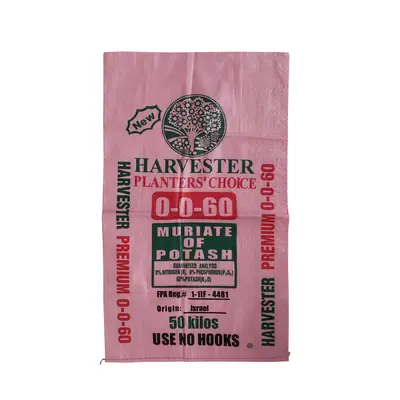
- Plain PP woven: lowest cost, very strong, breathable unless coated — best for grain, sugar, fertiliser and industrial goods.
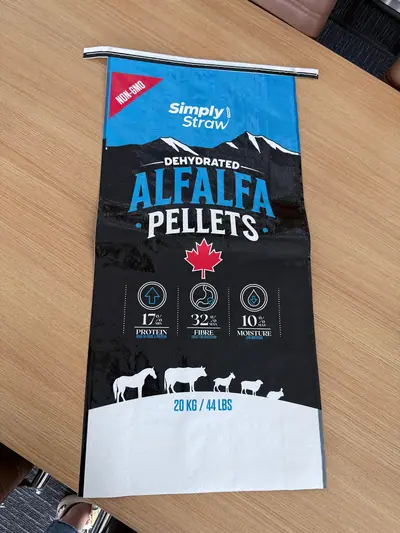
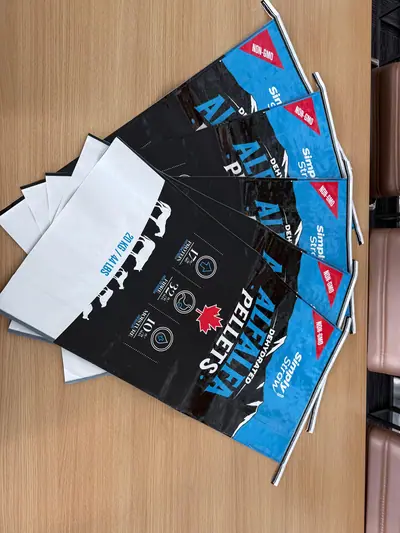
- BOPP laminated: photographic print plus moisture barrier — best for branded feed, pet food, rice and seed.
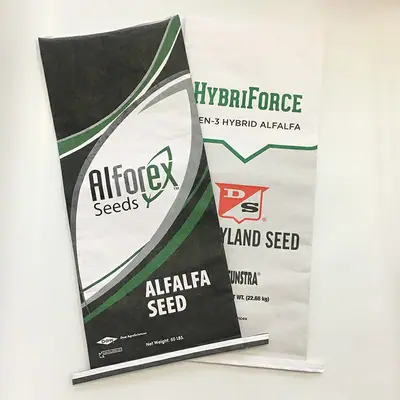
- Paper-poly: natural kraft look with woven strength — best for premium seed, forage and specialty feed.
- All three are polypropylene-based and can be recycled where PP collection exists.
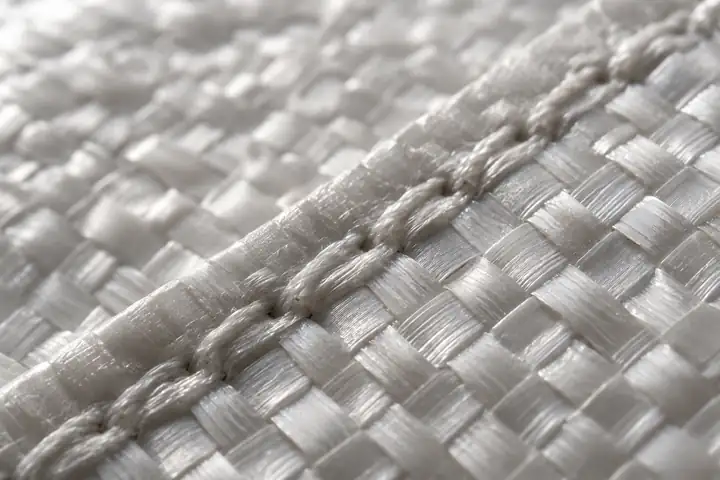
Most 10–50 kg agricultural and industrial sacks today are built on the same core: woven polypropylene fabric. What changes is the outer layer. That layer decides how the bag prints, how well it keeps out moisture and how it looks on a shelf or a pallet.
1. Plain PP woven sacks
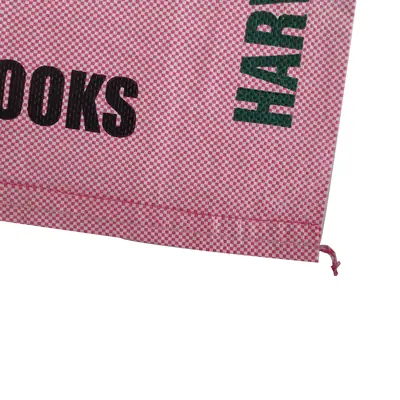
A plain woven sack is fabric woven from flat polypropylene tapes, cut and sewn. It may be uncoated (breathable) or PE-coated (laminated with a thin polyethylene film to block moisture and dust).
Strengths: very high strength-to-weight, low cost, tough under rough handling, easy flexo printing in a few colours.
Limitations: print quality is basic; uncoated bags let in moisture and fine dust.
Best for: grain, rice, sugar, salt, fertiliser, feed ingredients, sand and construction waste. See our PP Woven Sacks.
2. BOPP laminated woven bags
Here a biaxially oriented polypropylene (BOPP) film is reverse-printed by gravure and laminated onto the woven fabric. The ink sits between film and fabric, protected from scuffing.
Strengths: photographic, glossy or matte graphics; excellent moisture and grease resistance; strong brand presence at retail.
Limitations: printing cylinders add set-up cost, so minimum orders per design are higher (often around 10,000 pieces).
Best for: animal feed, pet food, rice and flour sold under a brand, seed and fertiliser for retail. Browse Laminated & BOPP Bags.
3. Paper-poly (paper-plastic composite) bags
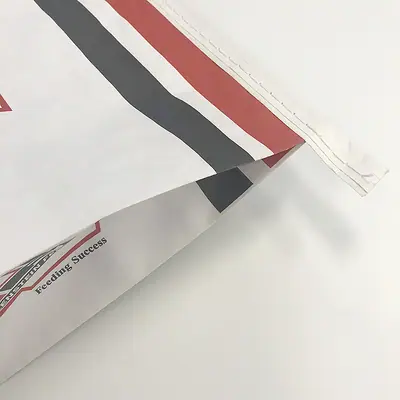
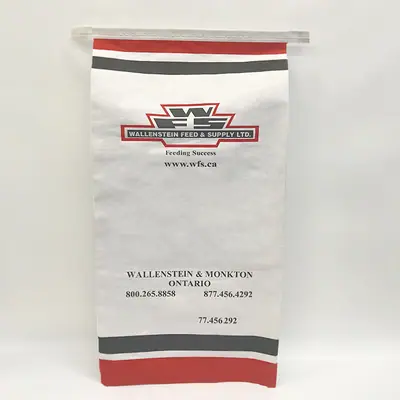
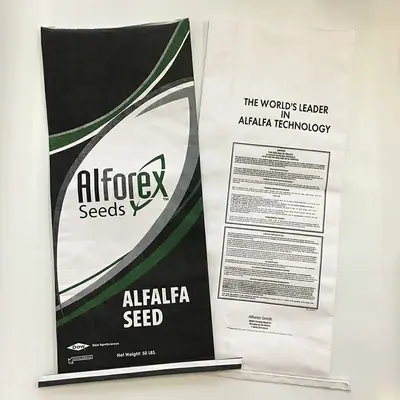
A paper-poly bag laminates kraft paper to woven PP — sometimes with a PE layer or liner for moisture protection.
Strengths: natural paper look and feel, excellent print surface, strong stacking, much stronger than multiwall paper.
Limitations: costlier than plain woven; paper face can scuff if handled wet.
Best for: alfalfa and grass seed (including 50 lb US formats), specialty feed, minerals and chemicals where a premium appearance matters. See our Paper Plastic Composite Sewn Side Alfalfa Seed Packaging and the Paper-Poly Bags family.
Comparison table
| Property | Plain PP woven | BOPP laminated | Paper-poly |
|---|---|---|---|
| Tensile and drop strength | ★★★★★ | ★★★★★ | ★★★★☆ |
| Moisture barrier | ★★☆☆☆ uncoated / ★★★★☆ coated | ★★★★★ | ★★★★☆ (with PE layer or liner) |
| Print quality | ★★☆☆☆ | ★★★★★ | ★★★★☆ |
| Shelf appeal | Basic | Premium, glossy | Premium, natural |
| Relative cost | Lowest | Medium–high | Medium–high |
| Typical MOQ per design | Low | Higher (cylinders) | Medium |
How to choose in three questions
- Does the bag need to sell the product? If it sits on a retail shelf or in a dealer's showroom, choose BOPP or paper-poly. If it goes straight to a mill, plain woven is enough.
- How sensitive is the product to moisture? Hygroscopic or high-value products need coating, lamination or a liner.
- What is your annual volume per design? Large volumes absorb cylinder costs easily; small volumes may favour flexo-printed coated woven bags.
Sustainability notes
Plain woven, BOPP-laminated woven and PE-coated woven bags are essentially mono-material polypropylene, which simplifies recycling where PP streams exist. Paper-poly combines paper and plastic, which is harder to separate. Ask us about recyclable constructions and lighter fabric weights that cut plastic use without losing strength.
Frequently asked questions
Is BOPP the same as PP?
BOPP is polypropylene film stretched in two directions, which makes it clear, stiff and printable. A BOPP bag is still a polypropylene bag.
Which bag is best for animal feed?
For branded retail feed, BOPP laminated woven bags are the most popular choice because they combine strong graphics with moisture protection. For bulk feed delivered to farms, coated plain woven bags are more economical.
Can paper-poly bags be micro-perforated?
Yes. Micro-perforation lets air escape during filling and lets seeds breathe, while lamination keeps out most moisture.
What fabric weight should a 50 kg bag use?
Typically 80–100 g/m² for grain and fertiliser. Heavier or sharper products may need more; we confirm by drop testing.