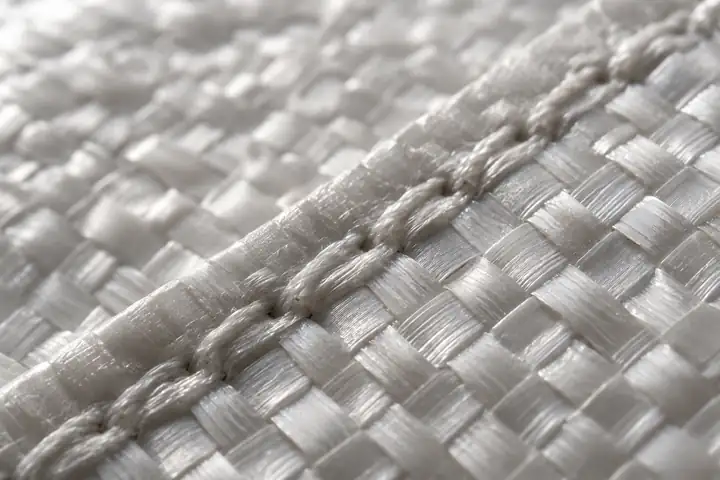
Key takeaways
- In raised beds, a weed barrier belongs under the bed (on the ground) and in the paths, not inside the growing soil.
- Add 1/2 in (13 mm) galvanized hardware cloth if burrowing animals are a problem; fabric alone will not stop them.
- For vegetable rows, black ground cover with pre-cut holes at crop spacing saves weeding and keeps fruit clean.
- Tree weed mats of 3 × 3 ft to 4 × 4 ft keep a weed-free circle around young trees.
- Keep fabric and mulch a few inches away from stems and trunks.
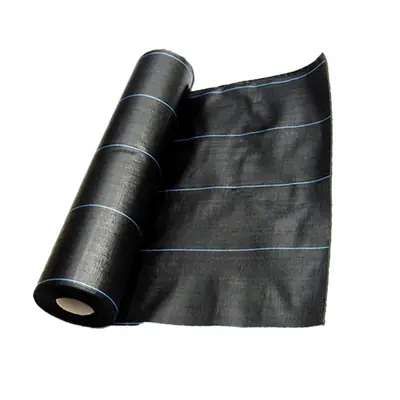
A weed barrier for raised beds works best on the ground under the bed and in the paths around it, not as a layer inside the growing soil. Lay woven landscape fabric (or cardboard) across the base before filling to stop grass and weeds coming up from below, and line the paths so you are not weeding between beds. In open vegetable gardens and orchards, use fabric with planting holes along rows and square weed mats around young trees.
This guide covers each case: raised bed liners, planter boxes, vegetable rows and tree rings.
Do you need a weed barrier for raised beds?
A raised bed filled with 10–12 in (25–30 cm) or more of fresh soil already smothers most weeds below. A barrier at the bottom helps when:
- The bed sits on lawn or on ground with running grasses, bindweed or other perennial weeds
- You want to keep the bed soil separate from the native soil, for example on clay or contaminated ground
- The bed sits on gravel or paving and you want to stop soil washing out
It is less useful on clean, weed-free ground where you want roots to reach deeper soil.
Raised garden bed liner options
| Liner | Placement | Life | Use it for |
|---|---|---|---|
| Cardboard | Bottom | One season | Converting lawn; breaks down and feeds soil |
| Woven landscape fabric | Bottom | Many years | Persistent perennial weeds and grasses; lets water drain |
| Galvanized hardware cloth, 1/2 in (13 mm) or 1/4 in (6 mm) | Bottom, under fabric or cardboard | Many years | Gophers, moles, voles |
| Woven fabric on inside walls | Sides | Many years | Keeping soil from washing through gaps in boards |
| Solid plastic sheeting | Avoid at bottom | — | Traps water; only for sides of wooden beds if food-safe |
Bottom liner
Cut raised bed landscape fabric 6–12 in (15–30 cm) larger than the bed footprint so it runs up the inside walls. Staple it to the frame. Woven polypropylene is permeable, so water still drains. Roots of deep crops such as tomatoes and squash will not pass through easily, so keep the bed at least 12 in deep if you use a fabric bottom.
Side liner
Lining the inside of wooden walls with woven fabric keeps fine soil from leaking between boards and reduces wet soil contact with the wood. Do not use plastic film on the bottom; water will pool.
Pest mesh
Fabric does not stop burrowing animals. Use galvanized hardware cloth on the ground first, folded up the sides by a few inches, then fabric or cardboard on top.
Landscape fabric for a planter box
A planter box on legs or a patio needs something different: a liner that holds soil in while letting water out.
- Line the base with woven fabric so soil does not wash through drainage holes or slats.
- Do not line the whole box with plastic film unless you also cut drainage holes.
- A drainage layer of gravel in the bottom is not necessary and can raise the water table in the soil; good potting mix and open drainage holes work better.
Vegetable garden weed barrier
For in-ground vegetable gardens, the two common systems are fabric over the whole bed with planting holes, and fabric in the paths only.
Fabric in paths, open beds
Lay woven fabric in the walkways and cover with wood chips or straw. Beds stay open for digging, compost and succession sowing. This is the most flexible option for home gardens.
Landscape fabric for vegetable garden rows
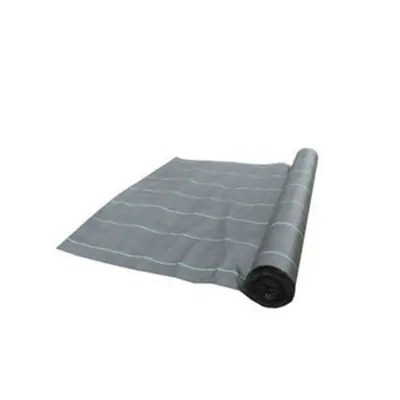
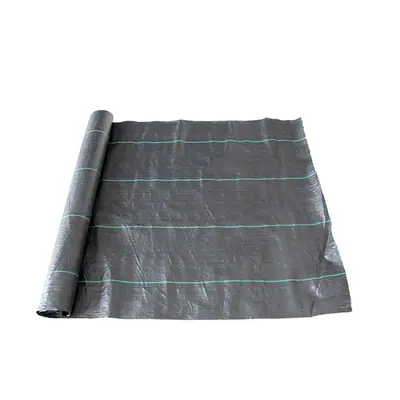
For transplanted crops that stay put all season (tomatoes, peppers, squash, melons, strawberries, brassicas), cover the bed with black ground cover and plant through it. Benefits:
- Warms the soil in spring, which helps heat-loving crops
- Keeps fruit off the soil, reducing rot and splash-borne disease
- Holds soil moisture, especially with drip irrigation underneath
- Eliminates most in-row weeding
Commercial growers use the same approach on a larger scale with woven ground cover; see woven ground cover for greenhouses, nurseries and farms.
Weed barrier with holes: spacing guide
Pre-cut or burned holes save time and keep rows straight. Typical spacings:
| Crop | Hole spacing | Rows per 4 ft (1.2 m) bed | Hole size |
|---|---|---|---|
| Onions, garlic | 4–6 in (10–15 cm) | 4–5 | 2–3 in (5–7.5 cm) |
| Lettuce, spinach | 8–12 in (20–30 cm) | 3–4 | 3 in |
| Strawberries | 12 in (30 cm) | 2–3 | 3–4 in |
| Peppers, eggplant | 18 in (45 cm) | 2 | 4 in |
| Tomatoes | 24 in (60 cm) | 1–2 | 4–6 in |
| Squash, melons | 36 in (90 cm) | 1 | 6 in |
How many holes? For a 4 × 25 ft bed of strawberries in 3 rows at 12 in: 25 ft ÷ 1 ft = 25 plants per row, × 3 rows = 75 holes.
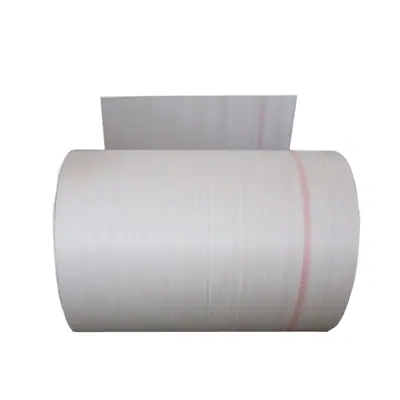
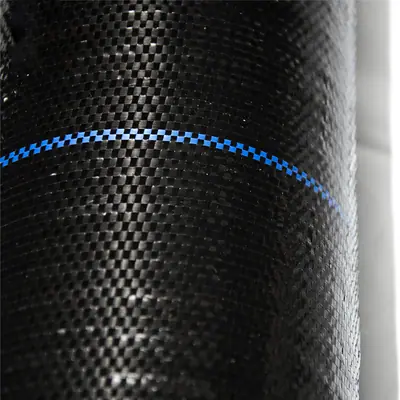
Woven fabric with guide lines makes marking easy: our UV Stabilized PP Weed Mat Offset Printing Extended can be supplied with printed or woven lines at set intervals, and burned holes seal the edges so they do not fray.
Black ground cover vs other colors in vegetable beds
Black ground cover is the standard because it blocks light completely and warms the soil. In very hot climates, white or white-on-black fabric keeps soil cooler for summer lettuce and brassicas. For background on colors and weights, see heavy duty landscape fabric.
Weed barrier around trees
Grass and weeds compete hard with young trees for water and nitrogen. A weed-free circle around the trunk for the first 2–3 years noticeably improves establishment, and it keeps string trimmers and mowers away from the bark.
Tree weed mats
Tree weed mats are square or round pieces of fabric with a slit to the center so they can be fitted around an existing trunk.
| Tree size at planting | Mat size | Pins |
|---|---|---|
| Seedlings, whips (forestry, hedges) | 16 × 16 in to 20 × 20 in (40–50 cm) | 4 |
| Bare-root and container trees | 3 × 3 ft (90 cm) | 4–6 |
| Larger nursery stock, fruit trees | 4 × 4 ft (1.2 m) | 6–8 |
| Orchard rows | Continuous strip 3–5 ft (1–1.5 m) wide | Every 3 ft on each edge |
Tree mats for weed control on a commercial scale (orchards, forestry, highway planting) are usually cut from woven polypropylene rolls, since it handles mowing debris and lasts several seasons in sun when UV-stabilized.
How to fit a tree mat
- Mow or cut weeds short and water the tree.
- Slide the mat around the trunk through the slit; overlap the slit edges by a few inches.
- Pin the corners and the slit.
- Leave a gap of 2–3 in (5–8 cm) around the trunk so bark stays dry and the trunk can grow.
- Optionally cover with 2 in of mulch, kept clear of the trunk.
As the tree grows, enlarge the center hole. Remove or enlarge mats on established trees whose roots have spread well beyond the mat.
Avoid volcano mulching
Piling mulch or soil against the trunk invites rot and rodents. Whether you use a mat or not, keep the root flare visible.
Garden weed mats for shrubs and perennials
Small garden weed mats and pre-cut squares are also useful around individual shrubs, berry bushes and newly planted hedges. They are quicker to fit than a whole bed of fabric and easy to remove once plants fill in. For whole-bed installation, follow how to lay landscape fabric.
When not to use a barrier in a food garden
- Beds you sow from seed in rows several times a year (carrots, radish, beans)
- Beds you amend heavily with compost each season
- Crops that spread by runners or need hilling, like potatoes
- Perennial crops that spread, such as asparagus and raspberries, unless used only in paths
For a balanced view of downsides, see landscape fabric pros and cons.
For growers and distributors
We manufacture woven polypropylene weed mat and pre-cut sizes for nurseries, orchards, farm stores and garden distributors, including Heavy Weight PP Weed Control Fabric with Enhanced and printed Breathable PP Woven Roll with Offset Printing. Custom widths, guide lines, hole patterns and labels are available for minimum order quantities. See Woven Rolls & Weed Mat or contact us for a quote.
Frequently asked questions
Should I put landscape fabric in the bottom of a raised bed?
It helps if the bed sits on lawn or ground with perennial weeds. Use permeable woven fabric, not plastic, and keep the bed at least 12 in deep so roots have enough room above it.
What is the best raised garden bed liner for gophers?
Galvanized hardware cloth with 1/2 in (13 mm) or smaller openings, laid on the ground and bent up the sides. Fabric alone will not stop burrowing animals.
What size tree mat do I need?
Use about 3 × 3 ft (90 cm) for typical bare-root or container trees and 4 × 4 ft (1.2 m) for larger stock. Small forestry seedlings can use 16–20 in squares.
Can I plant vegetables through landscape fabric?
Yes, for transplanted crops that stay in place all season, such as tomatoes, peppers, squash and strawberries. Cut or burn holes at crop spacing and run drip irrigation under the fabric.
Does black ground cover make the soil too hot?
It warms the soil, which helps spring crops. In hot summers, a light mulch on top or a white-faced fabric keeps soil temperatures lower for cool-season crops.
What is the best raised bed gardening liner?
Use a permeable woven landscape fabric as a raised bed gardening liner at the base to stop weeds and keep soil in, and a non-toxic membrane on the inside walls of timber beds if you want to slow rotting. Avoid solid plastic at the base, which traps water.