Key takeaways
- Polypropylene (PP) is a thermoplastic polymer made from propylene gas; it is one of the most widely produced plastics in the world.
- It is light (density about 0.90–0.91 g/cm³, so it floats), tough and chemically resistant, and melts at about 160–165 °C (320–330 °F).
- PP itself absorbs almost no water, but woven PP fabric is not waterproof unless it is coated, laminated or lined.
- PP carries recycling code 5 and is recyclable, though local collection varies.
Polypropylene (PP) is a thermoplastic polymer made by polymerizing propylene, a gas produced from oil refining and natural gas processing. It is light, tough, chemically resistant and cheap to process, which makes it one of the most widely used plastics in the world: in packaging, woven sacks, bulk bags, textiles, auto parts, food containers and medical items.
PP melts at around 160–165 °C (320–330 °F), absorbs almost no water and carries recycling code 5. This guide covers its key properties in plain terms, with a focus on why it is the dominant material for woven bags and agricultural fabrics.
What is polypropylene made of?
Polypropylene is a polyolefin, a family of plastics made only of carbon and hydrogen, like polyethylene. Its chemical formula is (C₃H₆)ₙ: long chains of propylene units, each carrying a small methyl (CH₃) side group.
Those side groups are what make PP different from polyethylene. In commercial isotactic polypropylene, the methyl groups all sit on the same side of the chain, so the chains pack neatly into crystals. That crystallinity gives PP its stiffness, higher melting point and resistance to fatigue.
Commercial grades come in three main types:
- Homopolymer PP: only propylene. Stiff and strong; the standard grade for woven tapes, fibers and raffia.
- Random copolymer: a little ethylene added randomly. Clearer and more flexible; used for containers and film.
- Impact (block) copolymer: an ethylene-propylene rubber phase. Much tougher in cold conditions; used for crates, buckets and car bumpers.
Polypropylene was first polymerized in the early 1950s and the isotactic form identified by Giulio Natta in 1954; commercial production began in 1957.
PP vs plastic: is polypropylene a plastic?
Yes. "PP vs plastic" is a common search, but polypropylene is a plastic: one specific type among many (polyethylene, PVC, PET, polystyrene and so on). When people say "plastic bag" they usually mean a polyethylene film bag; a "PP bag" is often a woven polypropylene sack. Both are plastics with different properties. For a direct comparison, see polypropylene vs polyethylene.
Key properties of polypropylene plastic
| Property | Typical value (homopolymer) | What it means in practice |
|---|---|---|
| Density | 0.90–0.91 g/cm³ | Lightest common plastic; floats on water |
| Melting point | 160–165 °C (320–330 °F) | Higher than polyethylene; can be hot-filled |
| Glass transition | about −10 to 0 °C (14–32 °F) | Becomes more brittle in freezing cold |
| Tensile strength (molded) | 30–40 MPa | Oriented tapes are many times stronger |
| Water absorption (24 h) | < 0.01–0.03% | Effectively does not absorb water |
| Chemical resistance | Excellent vs acids, alkalis, salts | Swells in some hydrocarbon and chlorinated solvents |
| UV resistance | Poor unless stabilized | Needs UV additives for outdoor use |
| Recycling code | 5 | Recyclable where PP is collected |
Values are typical published ranges; specific grades vary.
What is the polypropylene melting point?
The polypropylene melting point is about 160–165 °C (320–330 °F) for common homopolymer grades. Copolymers melt lower, roughly 130–150 °C (265–300 °F). PP is usually processed well above this, around 200–260 °C, when it is extruded into film, tapes or fiber.
For comparison, LDPE melts around 105–115 °C and HDPE around 130–135 °C. That gap is why PP is chosen for products that face hot filling, steam or dishwashers.
What is the polypropylene temperature range in use?
A practical polypropylene temperature range for continuous use is roughly:
- Upper limit: about 100 °C (212 °F) continuous for homopolymer, with short exposures to around 120–130 °C possible for many grades.
- Lower limit: around 0 °C (32 °F) for homopolymer before impact resistance drops noticeably; impact copolymers stay tough to about −20 °C (−4 °F) or lower.
For woven sacks and bulk bags, this means PP comfortably handles hot climates, sun-heated warehouses and most hot-filled powders, but bags should be handled with care in deep freezing conditions, where the fabric is more prone to tearing on impact.
Is polypropylene waterproof?
The material is; the fabric often is not.
- Solid PP absorbs practically no water (well under 0.1%). A molded PP container or a sheet of PP film is waterproof.
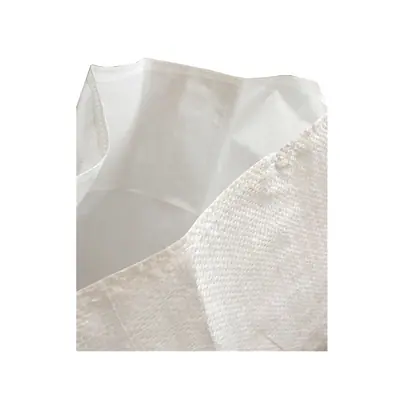
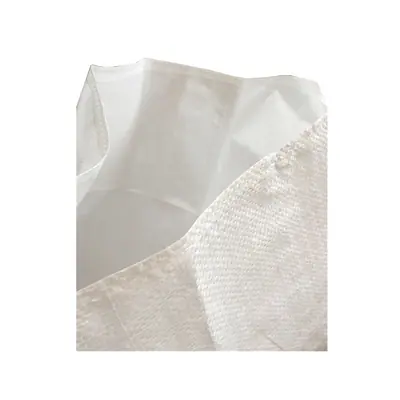
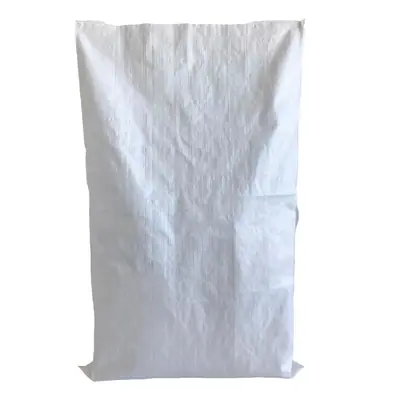
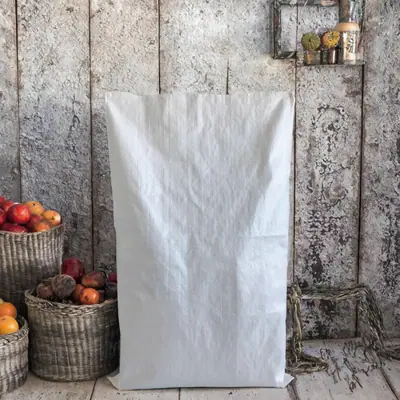
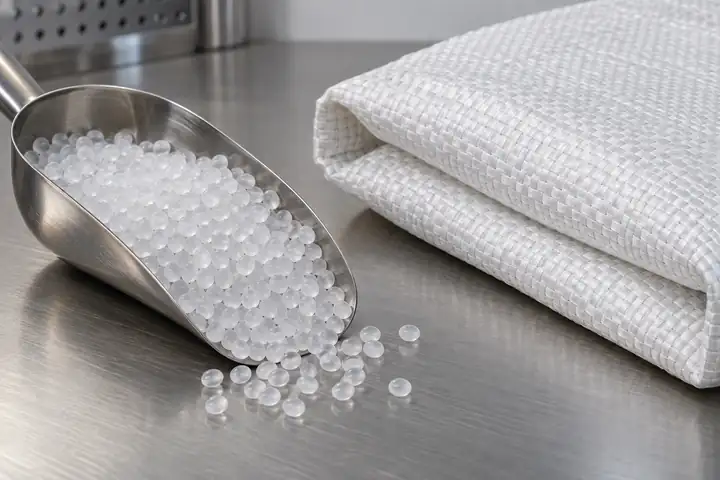
- Woven polypropylene fabric is made of flat tapes interlaced like a basket weave. Water passes through the tiny gaps between the tapes, so plain woven PP is water-resistant (it does not rot or weaken when wet) but not waterproof.
To make polypropylene fabric waterproof, manufacturers:
- Coat or laminate the fabric with a thin PP or PE film (typically 15–30 g/m²) that seals the gaps.
- Laminate BOPP film to the outside, which also gives a printable glossy surface.
- Insert a PE liner inside a sack or bulk bag.
Our Waterproof Lined PP Woven Bag with Bottom Gusset is an example of a lined bag for moisture-sensitive powders. Breathable, uncoated fabric is preferred when contents must lose moisture, such as fresh produce, firewood or some grains. For the difference between woven and non-woven PP fabric, see woven vs non-woven polypropylene fabric.
Is polypropylene recyclable?
Yes. Polypropylene carries resin identification code 5 (the number 5 inside the chasing-arrows triangle, often marked "PP"). It can be melted and re-extruded into new products such as crates, pallets, plant pots, fibers and composite lumber.
In practice:
- Rigid PP containers are accepted in many curbside programs, but not all. Check local rules.
- Woven PP sacks and bulk bags are usually not curbside items; they are collected by industrial recyclers or through take-back programs, then washed, shredded and pelletized.
- Single-material bags recycle most easily. Laminates combining PP with paper or PE, and heavily printed bags, are harder to recycle.
Reuse comes first: woven sacks and multi-trip bulk bags can often be used several times. See FIBC recycling and reuse for bulk bags specifically. Our Recyclable PP Woven Bag 50kg Heavy Duty Eco-Friendly is made as a single-polymer sack for easier recycling.
What is polypropylene used for?
| Sector | Common PP products |
|---|---|
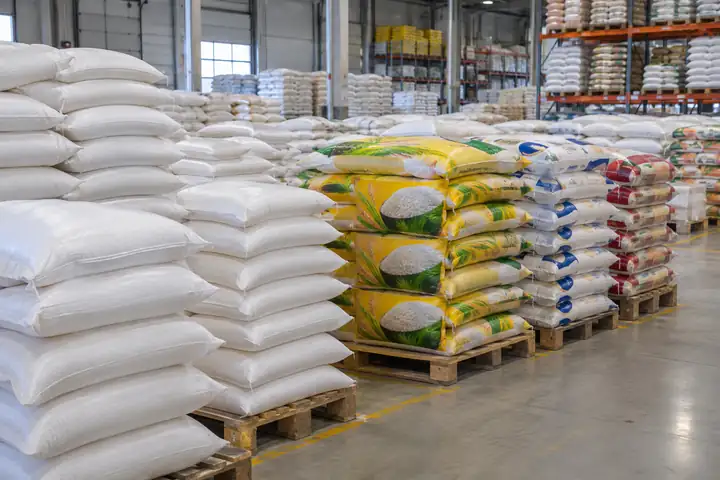
| Packaging | Woven sacks, BOPP laminated bags, bulk bags (FIBC), food containers, caps, film |
| Agriculture | Weed control fabric, shade cloth, leno mesh bags, baler twine, crop covers |
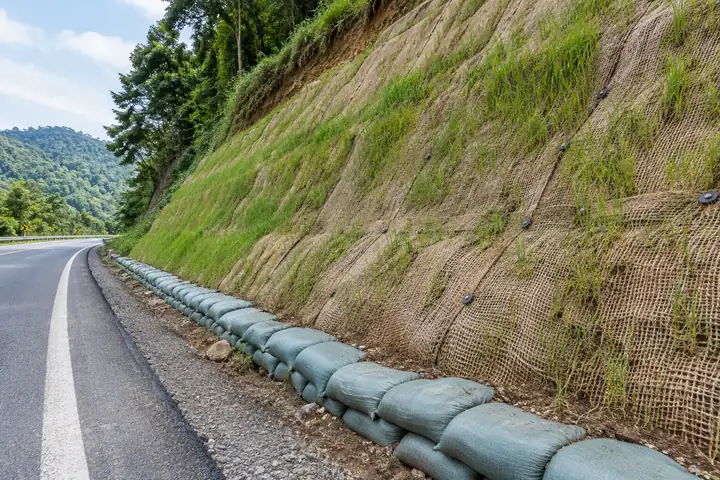
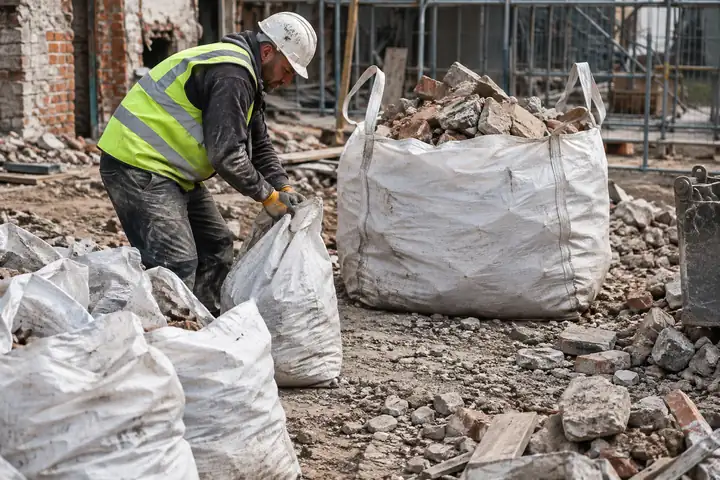
| Construction | Sandbags, geotextiles, debris bags, pipes, fibers in concrete |
| Textiles | Non-woven spunbond, carpet backing, ropes, upholstery |
| Automotive | Bumpers, battery cases, interior trim |
| Medical & household | Syringes, labware, storage boxes, microwave-safe containers |
Why PP is used for woven bags
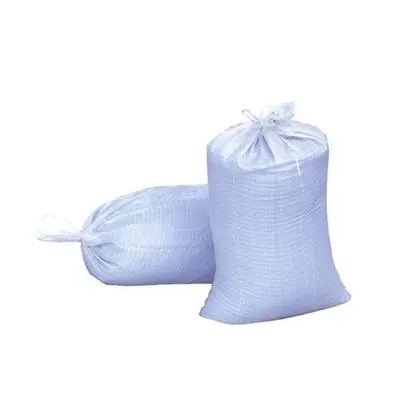
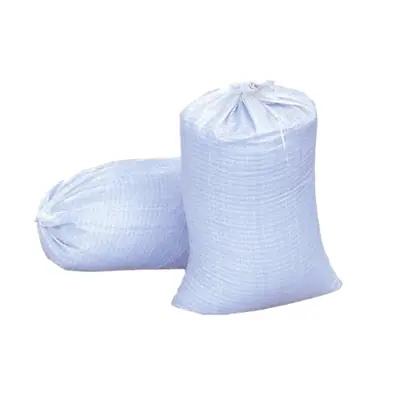
PP dominates woven packaging because it can be drawn (stretched) into flat tapes that are extremely strong for their weight. Stretching aligns the polymer chains, so a 1 mm wide tape can carry several kilograms. A typical 50 kg woven sack weighs only about 80–120 g. Add UV stabilizer, as in our UV Stabilized PP Woven Bag with Top Drawstring for Sand, and the same fabric serves outdoor uses such as sandbags. The full story is in our woven polypropylene bags guide.
Limitations of polypropylene
- UV degradation: unstabilized PP can lose much of its strength after a few months of strong sun. Specify UV stabilizer for any outdoor product.
- Cold brittleness: homopolymer PP is less impact-resistant below freezing.
- Hard to bond and print: its low surface energy requires corona treatment before printing or laminating.
- Flammable: PP burns; it can be made flame-retardant with additives where required.
Sourcing PP woven products
EGP converts polypropylene into woven sacks, bulk bags, mesh bags and fabrics at our facility in Yantai, China. If you need a PP woven product with specific GSM, UV rating, coating or printing, browse PP Woven Sacks or contact us with your requirements.
Frequently asked questions
Is polypropylene safe for food contact?
Food-grade polypropylene is widely used for food containers, caps and packaging because it is chemically inert and stable at higher temperatures. Whether a specific bag or container is suitable depends on the grade, additives and inks used, so check the supplier's food-contact documentation for the market you sell into.
What temperature does polypropylene melt at?
Common homopolymer polypropylene melts at about 160–165 °C (320–330 °F); copolymers melt somewhat lower, around 130–150 °C. It softens before melting, so practical continuous use is generally kept below about 100 °C.
Is polypropylene fabric waterproof?
Plain woven polypropylene fabric is water-resistant but not waterproof, because water passes through the gaps between the woven tapes. Coated, laminated or lined PP fabric is waterproof. Non-woven PP is also porous unless it is laminated.
Is polypropylene better than polyethylene?
Neither is better overall. Polypropylene is stiffer, stronger as woven tape and more heat-resistant; polyethylene is softer, tougher in cold and makes better flexible film and liners. That is why many sacks combine a PP woven outer with a PE liner.
What does recycling code 5 mean?
Recycling code 5 identifies polypropylene. It tells recyclers which resin the item is made of so it can be sorted. Whether a code 5 item is accepted in your bin depends on your local program; industrial PP such as woven sacks is usually recycled through specialist collectors.
Does polypropylene break down in sunlight?
Yes. Without UV stabilizers, polypropylene degrades in sunlight, becoming brittle and losing strength. Outdoor products such as sandbags, shade cloth and weed fabric are made with UV-stabilized PP, which extends outdoor life considerably.
What is PP plastic?
PP plastic is polypropylene, a thermoplastic polymer made from propylene gas. It is light, tough, resistant to most chemicals and moisture, and is recycling code 5. It is used for woven bags, packaging, textiles, car parts and food containers.
What is the density of polypropylene?
Polypropylene has a density of about 0.90–0.91 g/cm³, which makes it one of the lightest common plastics — lighter than water, so solid PP floats.
How would you define polypropylene in one sentence?
Polypropylene is a semi-crystalline thermoplastic polyolefin, (C3H6)n, made by polymerising propylene, valued for its low weight, chemical resistance, toughness and low cost.