Key takeaways
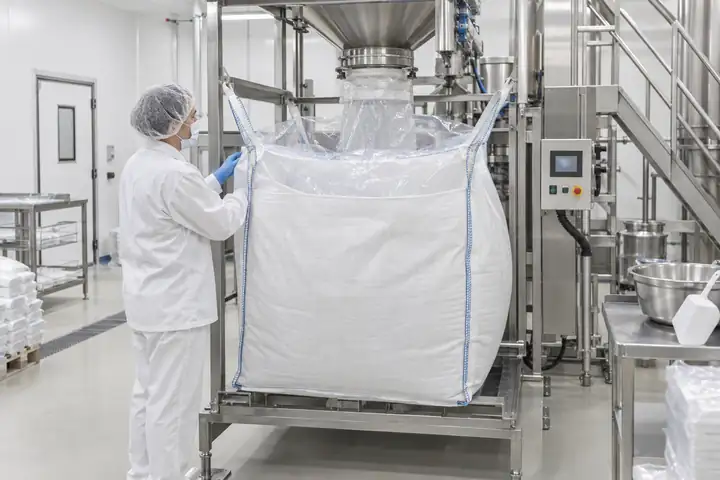
- A bulk bag liner is a polyethylene bag inside the woven FIBC that blocks moisture, stops fine powder sifting and keeps the product clean.
- Tubular liners are cheapest; form-fit liners follow the bag's shape and spouts, so they fill and discharge more completely.
- Typical thickness is 50–150 µm (2–6 mil); 100 µm (4 mil) is a common default.
- Food, static-sensitive and oxygen-sensitive products need food grade, conductive/dissipative or foil liners respectively.
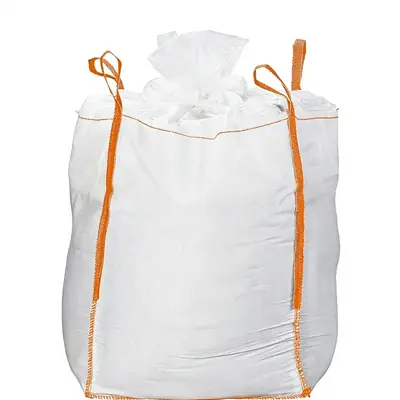
A bulk bag liner is a polyethylene (PE) bag fitted inside a woven polypropylene FIBC to keep moisture out, stop fine powders sifting through the fabric and seams, and protect the product from contamination. The main choice is between a simple tubular liner and a form-fit liner shaped to the bag and its spouts; thickness is typically 50–150 microns (2–6 mil), and special products need food grade, foil or static-control liners. If your product is coarse, dry and non-food, you may not need a liner at all.
This guide focuses on liners. For the bag itself, start with how to choose an FIBC bulk bag.
Do you need a bulk bag liner?
FIBC liners solve four problems. If none of them applies, a liner adds cost and handling time for nothing.
| Problem | Example products | Liner needed? |
|---|---|---|
| Moisture pickup (hygroscopic product) | Fertilizer, cement, sugar, salt, milk powder | Usually yes |
| Fine powder sifting through weave and seams | Pigments, carbon black, flour, talc, silica flour | Yes, or coated fabric plus sift-proof seams |
| Contamination or hygiene | Food ingredients, pharmaceuticals, resin pellets | Yes, food grade or clean liner |
| Oxygen, aroma or high barrier | Specialty chemicals, coffee, some food powders | Yes, foil or multilayer barrier liner |
| Coarse, dry, non-food | Sand, gravel, firewood, scrap | No |
Coated fabric is the alternative for moderate cases. A laminated PP fabric stops most sifting and slows moisture, but it is not a sealed barrier because the seams, top and spout remain open paths. A liner is the only way to get a closed, sealable inner package.
What types of FIBC liners are there?
Tubular liners
A tubular liner is a lay-flat PE tube, cut to length, sometimes with a heat-sealed bottom or a sealed-in discharge spout. It is the cheapest and most common bulk liner bag. Because it is not shaped to the bag, it wrinkles at the corners when filled, which can trap product during discharge and can be pulled out of the bag by flowing product.
Form-fit liners
A form-fit liner is made from flat or gusseted film and heat-sealed into the exact shape of the bag, including top and bottom spouts. It sits smoothly against the fabric, so the bag fills to its full volume, the product flows out without bridging in the corners, and less residue is left behind. Form-fit liners cost more but are the standard choice for automatic filling lines, for powders that bridge, and for anything with a discharge spout.
Baffle liners
A baffle liner is a form-fit liner designed for a baffle bag, so it fills the square shape between the internal baffles. Read more on baffle bulk bags and Q-bags.
Aluminum foil (barrier) liners
Foil liners are laminates of PE with aluminum foil (and often polyester or nylon). They provide very low moisture and oxygen transmission and can be vacuum packed or nitrogen flushed. They suit high-value, oxygen-sensitive or extremely hygroscopic products.
Conductive and static-dissipative liners
A standard PE liner is an electrical insulator. In a Type C or Type D anti-static bag, an ordinary liner can defeat the bag's protection. IEC 61340-4-4 classifies liners as well as bags, and the combination must be specified and tested as compatible. See types of FIBC bags.
Form-fit vs tubular liners compared
| Factor | Tubular liner | Form-fit liner |
|---|---|---|
| Cost | Lower | Higher |
| Fit in bag | Loose, wrinkles at corners | Follows bag and spouts |
| Usable volume | Slightly reduced | Full bag volume |
| Discharge | Product can hang up in corners; liner may pull out | Clean, complete discharge |
| Automatic filling lines | Possible with care | Preferred |
| Best for | Granules, moderate moisture protection, manual filling | Powders, food, pharma, spout-to-spout systems |
How are liners attached to the bag?
The attachment method matters as much as the liner type:
- Loose (inserted): the liner sits inside the bag unattached. Cheapest, easy to remove for recycling, but can shift during filling and pull out during discharge.
- Tabbed: small PE tabs on the liner are sewn into the bag seams at the corners or top. The liner stays in place during discharge. A good compromise for most powders.
- Sewn-in: the liner's top or spout is sewn into the bag's top seam or spout. Very secure, but the liner is harder to separate later.
- Glued (hot-melt): the liner is bonded to the fabric at points. Used with form-fit liners on demanding lines.
If you have had liners sucked out of the bag into the hopper, move from loose to tabbed or glued.
What liner thickness do you need?
Poly liners are specified in microns (µm) outside the US and in mil (thousandths of an inch) in the US. 1 mil = 25.4 µm.
| Thickness | mil | Typical use |
|---|---|---|
| 50–60 µm | 2–2.4 mil | Light dust and moisture protection, non-critical products |
| 70–80 µm | 3 mil | General purpose; fertilizer, salt, granules |
| 100 µm | 4 mil | Common default; powders, food ingredients |
| 120–150 µm | 5–6 mil | Abrasive or sharp products, heavy fills, long storage |
| Laminated foil, often 100–150 µm total | 4–6 mil | High moisture and oxygen barrier |
Thicker is not automatically better. A thicker film is stiffer, which can make the liner harder to fill and tie, and it adds weight and cost. Puncture resistance depends on resin as much as gauge: LLDPE (linear low-density polyethylene) blends resist puncture and tearing better than plain LDPE at the same thickness, and coextruded films can add a nylon or barrier layer. For background on the materials, see polypropylene vs polyethylene bags.
What makes a food grade liner?
Food grade liners are made from virgin resin and additives that comply with food-contact rules in the destination market — for example, US FDA regulations for olefin polymers (21 CFR 177.1520) or EU Regulation (EU) No 10/2011 on plastic food-contact materials. They should be produced and packed in clean conditions, kept free of foreign matter and supplied with a declaration of compliance. The bag around them should also come from controlled, hygienic production.
Food grade is a system, not a film: the liner, the bag, the production area and the packing all count. Our article on food grade bulk bags covers the hygiene side, and our Durable Polypropylene Flat Bottom Food Grade Jumbo Bags and PP Food Grade Tubular Woven Bulk Bag 1 Ton Antistatic are examples of food-grade constructions.
How to fill and discharge a lined bulk bag
Most liner problems happen at the filling head and the discharge spout:
- Inflate the liner with a short blast of air (or a blower on the filler) before filling, so it sits against the fabric and does not twist.
- Seal the inlet spout of the liner around the fill head, separately from the outer bag spout, to keep dust out of the gap between liner and fabric.
- Fill with vibration or settling for powders, so the liner fills the corners evenly.
- Close the liner by twisting and tying with a cable tie, goose-necking, or heat sealing (for barrier and food applications), then close the outer bag.
- At discharge, untie the outer spout first, then the liner spout, and control the flow. With a tubular liner, watch for the liner being pulled into the outlet.
For filler and unloader features that help with liners — liner inflation, spout clamps, iris valves — see our bulk bag filling and discharging equipment guide.
IBC liners and container liner bags: how are they different?
Search terms overlap, but these are different products:
| Liner | Fits inside | Typical content | Notes |
|---|---|---|---|
| FIBC / super sack liner | Woven bulk bag, 0.5–2 m³ | Dry powders and granules | Covered in this article |
| IBC liner | Rigid IBC tote, commonly 1,000 L (275 gal) | Liquids and pastes | Shaped PE bag with valve fitment; keeps the tote clean so it can be reused |
| Container liner bag (bulk container liner) | 20 ft or 40 ft shipping container | Dry bulk, up to the container's payload | Turns a standard box into a bulk container; loaded by blower or conveyor through a bulkhead, discharged by tipping |
Bulk container liners are worth considering when you ship a single free-flowing dry product, such as malt, grain, plastic pellets or minerals, in full container loads. A 20 ft container has roughly 33 m³ of internal volume and a 40 ft about 67 m³, but the payload limit of the container, chassis and road rules usually caps dense products first. They save the cost of individual bags but require loading and tipping equipment at both ends.
IBC liners solve a different problem: they let liquid users reuse rigid totes without cleaning. They are not interchangeable with FIBC liners.
Liners and recycling
A PE liner (resin code 4) and a woven PP bag (resin code 5) are different polymers and should be separated before recycling. Loose and tabbed liners are easiest to separate; sewn-in and glued liners are harder. Our FIBC recycling and reuse guide explains how to prepare used bags for recyclers.
Ordering lined bulk bags from EGP
EGP (Yantai Evergreen Packaging) manufactures woven PP bulk bags in Yantai, China, with PE liners specified to your product, plus coated fabrics for products that do not need a full liner — for example our Super Sack PP Woven Flat Bottom Jumbo FIBC Bag Cement for cement or a spout-discharge design such as our Large Capacity Jumbo Bag Integrated Discharge Outlet. Tell us the product, fill weight, filling method and how long the product is stored, and we will propose liner type, thickness and attachment with a drawing. Browse our FIBC Bulk Bags or request a quote.
Frequently asked questions
What thickness should a bulk bag liner be?
Most bulk bag liners are 70–100 µm (3–4 mil). Use 50–60 µm for light dust protection and 120–150 µm for abrasive products, heavy fills or long storage. Barrier products may need a foil laminate instead of more PE.
What is the difference between form-fit and tubular liners?
A tubular liner is a simple PE tube that sits loosely in the bag and wrinkles at the corners. A form-fit liner is shaped to the bag and its spouts, so it fills fully, discharges more cleanly and is less likely to be pulled out. Form-fit costs more but is preferred on automatic lines and for powders.
Can I use a standard liner in an anti-static bag?
Usually not. A standard PE liner is insulating and can cancel the protection of a Type C or Type D bag. Use a liner specified as compatible with that bag type under IEC 61340-4-4.
Are super sack liners reusable?
Liners are generally single use, especially for food and chemical products, because cleaning and inspecting thin film is not practical. Even in reusable 6:1 bag programs, the liner is normally replaced each trip.
What is a food grade liner made of?
Food grade liners are usually virgin LDPE or LLDPE, or a coextruded film, made from resins and additives that comply with food-contact regulations such as US FDA 21 CFR 177.1520 or EU Regulation 10/2011. Ask the supplier for a declaration of compliance for your market.