Key takeaways
- Premixed concrete bags in the US are sold as 40, 50, 60, 80 and 90 lb; the 80 lb bag is the contractor standard.
- A US sack of portland cement weighs 94 lb (42.6 kg); most other markets use 25 kg or 50 kg bags.
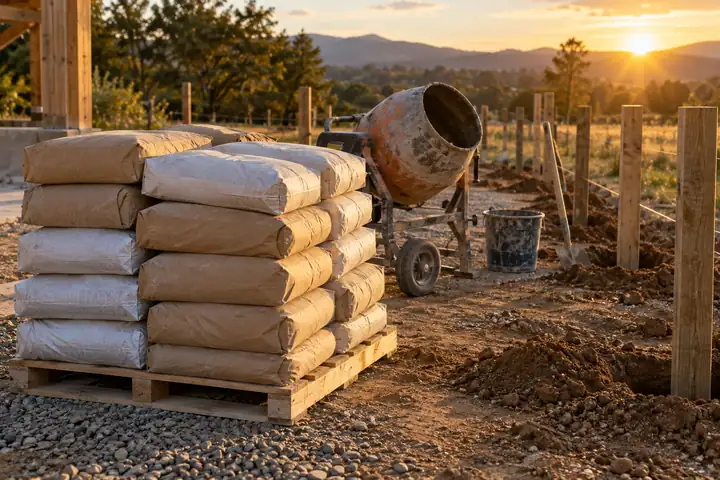
- Typical pallets: 42 × 80 lb, 56 × 60 lb, 70 × 50 lb (about 3,360–3,500 lb), but counts vary by plant.
- An 80 lb bag of concrete needs roughly 3 quarts (about 2.8 L) of water; follow the label and add it gradually.
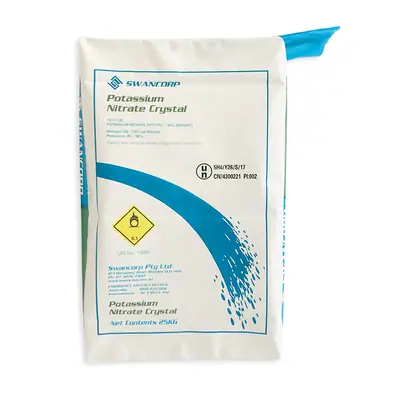
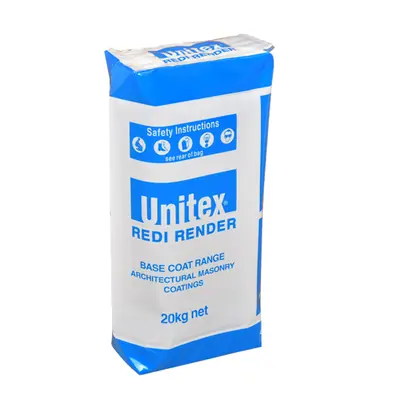
A standard bag of premixed concrete in the US weighs 40, 50, 60, 80 or 90 lb, with the 80 lb bag (36.3 kg) being the most common contractor size. A bag of portland cement, which is only the binder and not a complete mix, weighs 94 lb (42.6 kg) in the US, while most of the world sells cement in 25 kg or 50 kg bags. A full pallet of 80 lb concrete usually carries about 42 bags, or roughly 3,360 lb.
Skip the maths: our free concrete bag calculator does this calculation for you in seconds.
This guide covers the weights, the pallet math, how much water each bag takes, what "6-sack" concrete means and how mortar bags differ. If you need to know how many bags a project takes, use our concrete bag calculator guide instead; this article focuses on the bags themselves.
How much does a bag of concrete weigh?
| Bag | Weight (kg) | Typical yield | Typical use |
|---|---|---|---|
| 40 lb concrete mix | 18.1 kg | 0.30 cu ft | Small repairs, easy handling, retail |
| 50 lb concrete mix | 22.7 kg | 0.375 cu ft | Post setting, fast-setting mixes |
| 60 lb concrete bag | 27.2 kg | 0.45 cu ft | General DIY, posts, small pads |
| 80 lb bag of concrete | 36.3 kg | 0.60 cu ft | Contractor standard for slabs and footings |
| 90 lb concrete mix | 40.8 kg | 0.675 cu ft | Fewer bags per yard; heavy to handle |
The weight is the dry blend of portland cement, sand and coarse aggregate (gravel). Yields are typical; always check the yield printed on the bag, because high-strength, fiber-reinforced and fast-setting mixes can differ.
Why 80 lb? It is about the heaviest bag one worker can repeatedly lift and carry without mechanical help, and it halves the number of bags per yard compared with 40 lb. Many retailers and producers have added 50 and 60 lb sizes because lighter bags are safer to handle all day.
How much does a bag of cement weigh?
Cement and concrete are not the same thing. Cement is the gray powder that binds aggregate together; concrete is cement plus sand, gravel and water.
| Product | Common bag weight | Notes |
|---|---|---|
| Portland cement (US) | 94 lb (42.6 kg) | One sack is about 1 cu ft of loose cement |
| Portland cement (most other markets) | 25 kg or 50 kg (55 or 110 lb) | 25 kg is increasingly common for manual handling limits |
| Masonry cement / mortar cement (US) | commonly 70–75 lb | Blended for mortar, not for structural concrete |
| Pre-blended mortar mix (US) | 60 or 80 lb | Cement, lime and sand; just add water |
| Hydrated lime (US) | commonly 50 lb | Used in portland-lime mortars and plaster |
So the weight of a sack of cement depends on where you are. When a US specification talks about "sacks" of cement per cubic yard, it always means the 94 lb sack.
What does 6 sack concrete mean, and what psi is it?
"Six-sack" concrete is ready-mix with six 94 lb sacks of portland cement per cubic yard: 6 × 94 = 564 lb of cement per yd³ (about 335 kg/m³). It is an old way of describing richness that is still heard on jobsites.
The compressive strength depends mostly on the water-cement ratio, not the cement count alone, so 6-sack concrete psi can vary. As a rough industry guide, 5-sack mixes are often in the 2,500–3,000 psi range, 6-sack around 3,500–4,000 psi and 7-sack higher, assuming normal water content and aggregates. For anything structural, order by specified psi (for example 3,000 or 4,000 psi at 28 days) rather than by sack count.
"Straight sack concrete" is used loosely. Some people mean pouring premix straight from the sack into a post hole without mixing (see dry pour below); others use it for a mix described only by its sack count, with no admixtures. If a quote or drawing uses the term, ask the supplier to confirm the psi.
How many bags are in a pallet of concrete?
| Bag size | Typical bags per pallet | Pallet weight (approx.) | Pallet volume of concrete |
|---|---|---|---|
| 80 lb | 42 | 3,360 lb (1,524 kg) | 25.2 cu ft (0.93 yd³) |
| 60 lb | 56 | 3,360 lb (1,524 kg) | 25.2 cu ft (0.93 yd³) |
| 50 lb | 70 | 3,500 lb (1,588 kg) | 26.3 cu ft (0.97 yd³) |
| 94 lb portland cement | commonly about 30–40 | about 2,800–3,800 lb | — |
| 25 kg cement (metric markets) | e.g. 40–60 | 1,000–1,500 kg | — |
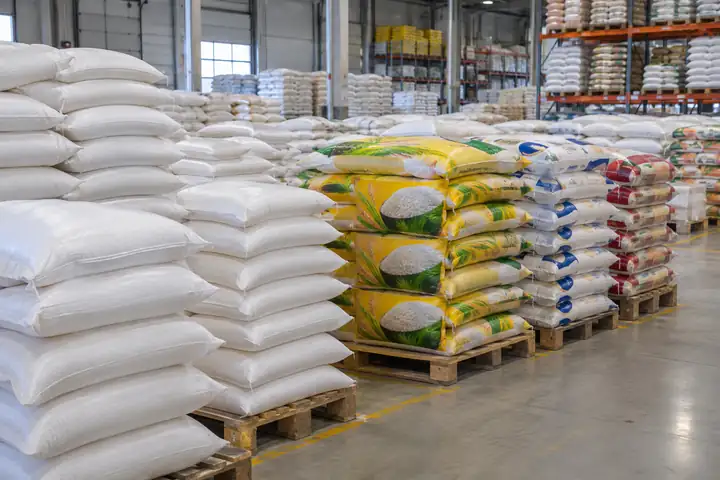
Counts vary by plant, bag dimensions and pallet pattern, so confirm with your supplier. A useful shortcut: one pallet of 80 lb or 60 lb bags makes a little under one cubic yard (42 × 0.60 = 25.2 cu ft; 27 cu ft is a yard).
How many bags of cement on a pallet is likewise set by weight limits more than space: most plants keep pallets near 1–1.7 tonnes so they can be double-stacked in a warehouse and handled by standard forklifts.
Why pallet counts matter for the bag itself
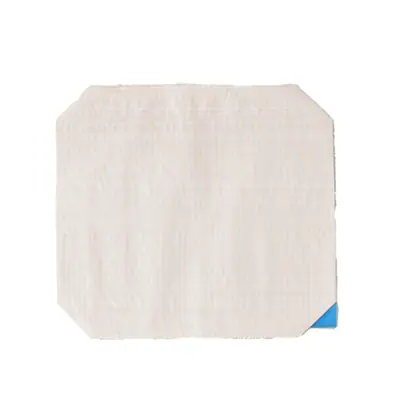
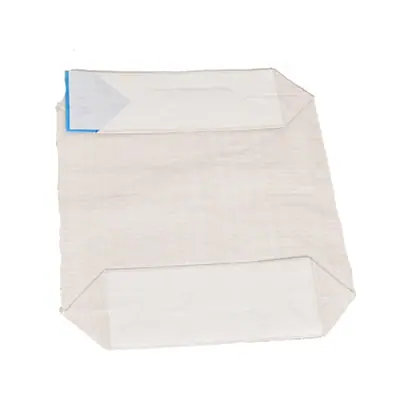
On a 42-bag pallet, the bottom layer carries the weight of every layer above it, and a second pallet stacked on top doubles that load. That is why bagged-concrete producers care about bag construction: block-bottom (square-bottom) valve bags form neat bricks that interlock, anti-slip coatings stop layers sliding in transit, and laminated woven polypropylene resists bursting when a forklift tine catches a corner. Our Custom Logo Square Bottom Laminated PP Woven Waterproof and Moisture-Proof Kraft Paper Valve Bag 35kg Block Bottom are built for exactly this stacking pattern. For a full comparison of sack materials see our cement bag types guide.
How much water for an 80 lb bag of concrete?
Most standard 80 lb mixes call for about 3 quarts (0.75 gal, about 2.8 L) of water, and the same ratio scales down for smaller bags. Start with roughly three-quarters of that, mix, then add water slowly until the concrete is workable — like thick oatmeal, holding its shape when squeezed.
| Bag | Starting water (approx.) | Metric |
|---|---|---|
| 40 lb concrete | about 1.5 qt | about 1.4 L |
| 50 lb concrete | about 2 qt | about 1.9 L |
| 60 lb concrete | about 2.25 qt | about 2.1 L |
| 80 lb concrete | about 3 qt | about 2.8 L |
| 90 lb concrete | about 3.4 qt | about 3.2 L |
The answer to "how much water for a 50 lb bag" depends on the product: a 50 lb bag of concrete mix takes about 2 quarts, but a 50 lb fast-setting post mix, mortar mix or sand mix can take noticeably more or less. The label is the authority. Too much water increases shrinkage cracking and can cut strength substantially; too little leaves dry pockets.
Can you dry pour concrete bags?
Dry pouring — filling a post hole with dry mix and then soaking it — is common and is explicitly allowed by some fast-setting post-mix products. For standard mixes it is a compromise:
- Fine for: fence and mailbox posts, where the concrete mainly needs to lock the post in place. Pour in layers and soak each one.
- Not for: slabs, steps, footings or anything load-bearing. Water does not penetrate evenly, leaving weak, unhydrated zones and a poor surface.
If strength matters, mix it. Our fence post bag table shows how many bags each hole size needs.
Masonry mortar bags: what's in an 80 lb bag of mortar?
A masonry mortar bag can contain one of two things:
- Pre-blended mortar mix (60 or 80 lb): cement, lime and sand already blended. An 80 lb bag of mortar typically yields around 0.6–0.7 cu ft; check the bag. Add water only.
- Masonry cement or portland-lime (commonly 70–75 lb in the US, 25 kg elsewhere): binder only. You mix it with roughly three parts sand on site, which is cheaper on large jobs.
Mortar is graded by type — commonly Type N (general above-grade walls), Type S (higher strength, below-grade and retaining) and Type M (highest compressive strength). Using concrete mix as mortar does not work: the coarse gravel makes joints impossible.
Concrete bag walls: building a cement bag retaining wall
A concrete bag wall is built by stacking unopened bags of premix like bricks, staggering the joints, driving rebar through the courses and soaking the whole wall with water. The concrete hydrates inside the bags; paper sacks weather away over months to leave a stone-like texture.
Practical points:
- Keep these walls low — garden edging, planters and small terraces. Taller retaining walls carry significant soil pressure and usually require engineering and a permit; check local codes.
- Use paper-sacked premix if you want the bag to disappear. Woven polypropylene sacks do not rot; they need to be cut away or covered.
- Soak thoroughly and repeatedly, especially in hot weather, because the inside of each bag must get enough water.
- Provide drainage gravel behind any wall that holds back soil.
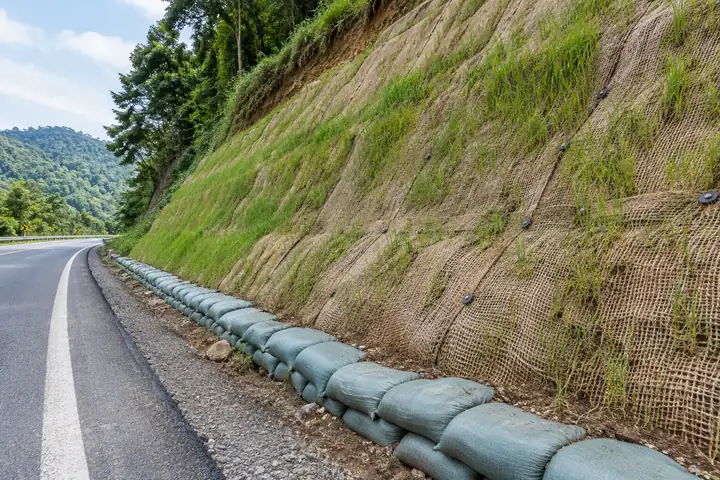
For temporary walls and erosion work, filled woven sacks are a different technique; see our empty sandbags buying guide.
For bagged concrete and cement producers
Every number in this article assumes a bag that holds its rated weight from the filling spout to the jobsite. EGP manufactures woven polypropylene, laminated and kraft-paper valve sacks for cement, concrete premix, mortar and plaster, including heavy 45 kg designs such as the Heavy Duty PP Valve Bag 45kg Virgin PP Anti-Slip. Browse the Valve Bags range, or compare valve bags with open-mouth bags for your line. Send your fill weight, product and filler type through our contact page for a factory-direct quote.
Frequently asked questions
How much does an 80 lb bag of concrete cover?
An 80 lb bag yields about 0.60 cu ft, which covers roughly 1.8 sq ft at 4 in thick or 2.4 sq ft at 3 in thick. Check the yield on your bag, as specialty mixes differ.
How many bags of cement are on a pallet?
For US 94 lb portland cement, pallets commonly carry around 30–40 sacks; for 25 kg bags, 40–60 per pallet is typical. The exact count depends on the plant's pallet pattern and weight limit, so confirm before ordering trucks.
What is the weight of a sack of cement in kg?
A US sack of portland cement is 94 lb, or 42.6 kg. In most other countries cement is sold in 25 kg or 50 kg bags.
Is a 60 lb concrete bag better than 80 lb?
They contain the same mix; a 60 lb bag yields about 0.45 cu ft against 0.60 cu ft for 80 lb. The 60 lb bag is easier and safer to handle, while 80 lb bags mean fewer bags to open per cubic yard (45 instead of 60).
Can I use more water to make concrete easier to pour?
Adding extra water makes concrete flow more easily but lowers its strength and increases shrinkage cracking. Use the quantity on the label and, for workability, use proper tools or a plasticizing admixture rather than more water.
How many 80 lb bags of concrete are on a pallet?
Typically about 42 bags of 80 lb concrete per pallet (around 3,360 lb), although some plants stack 40 or 48. Pallets of 60 lb bags usually carry about 56 bags.
What is a 60 lb bag of high-strength concrete mix?
High-strength mixes are premixed concrete with more cement, designed to reach roughly 5,000 psi rather than the 4,000 psi typical of standard mixes. A 60 lb bag still yields about 0.45 cu ft; always confirm strength and yield on the bag.
How many cubic feet are in a 60 lb bag of concrete?
About 0.45 cu ft (roughly 12.7 litres). That means about 60 bags per cubic yard before waste.