Key takeaways
- Erosion control fabric covers bare soil until vegetation takes over; most products are temporary by design.
- Straw blankets suit gentle slopes for about a year; straw-coconut and coir last longer on steeper ground.
- Silt fence (woven PP) traps sediment at the bottom of a slope; it does not protect the slope itself.
- UV-stabilized woven PP bags and geocells handle steep banks, channels and toe protection.
- Match the product to slope steepness, water flow and how long protection is needed.
Erosion control fabric is any textile laid on bare soil to hold it in place against rain, wind and runoff until plants establish. The most common types are biodegradable erosion control blankets (straw, coconut coir or wood fiber held in netting) for seeded slopes, woven polypropylene silt fence for trapping sediment at the bottom of a site, and permanent synthetic mats, geocells and filled bags for steep banks and channels. The right choice depends on slope steepness, water flow and how long protection is needed.
This guide compares the main erosion control products and materials and gives practical installation specs. For choosing plants to finish the job, see erosion control plants for slopes.
How erosion control works
Soil erodes when raindrops dislodge particles and running water carries them away. Erosion control materials reduce this in three ways:
- Cover the soil so raindrops do not hit it directly (blankets, mulch, mats).
- Slow the water so it cannot carry soil (wattles, check dams, bags, geocells).
- Trap sediment before it leaves the site (silt fence, sediment bags, inlet protection).
Most products are a bridge: they protect the soil until roots of grasses and ground covers bind it permanently.
Erosion control products compared
| Product | Material | Typical longevity | Slope range (H:V) | Main use |
|---|---|---|---|---|
| Hydromulch | Wood or paper fiber with tackifier, sprayed | Months | Up to about 2:1 | Large seeded areas |
| Straw erosion control blanket, single net | Straw in photodegradable netting | About 12 months | Up to about 3:1 | Gentle slopes, swales with low flow |
| Straw blanket, double net | Straw, net both sides | About 12 months | Up to about 2:1 | Moderate slopes |
| Straw-coconut blanket | 70/30 straw/coir | About 18–24 months | Up to about 1.5:1 | Steeper slopes, slower vegetation |
| Coir (coconut) blanket or mat | Coconut fiber | About 24–36 months or more | Up to about 1:1 | Steep slopes, streambanks |
| Turf reinforcement mat (TRM) | Synthetic 3D matrix | Permanent | Steep slopes, channels | High-flow channels, permanent reinforcement |
| Silt fence | Woven PP fabric on stakes | Construction period | Base of slope | Sediment trapping |
| Geocell | HDPE honeycomb, filled | Permanent | Steep slopes, channels | Confining soil, gravel or concrete |
| Filled woven PP bags | UV-stabilized PP + soil/sand | Seasons to years (with UV stabilizer) | Steep banks, toe | Toe protection, berms, vegetated walls |
Longevity and slope limits vary by product and climate; always follow the maker's rating.
Erosion control blankets
An erosion control blanket (ECB) is a rolled mat of natural fibers held between light netting. It is laid over seeded soil, stapled down, and left to rot away as grass grows through it.
Biodegradable erosion control blanket options
- Straw erosion control blanket: the lowest-cost option, fine for gentle slopes and lawns. Most degrade within a year.
- Straw-coconut: coir fibers add strength and longevity for steeper slopes and slow-growing seed mixes.
- Coir: the strongest natural fiber, used on streambanks, shorelines and steep cuts.
- Wood excelsior: curled wood fibers, heavy and good at holding seed in place.
Netting matters. Many blankets use photodegradable polypropylene netting that becomes brittle in sunlight over months. In wildlife-sensitive areas, specify blankets with natural-fiber (jute) netting or loose-weave "wildlife friendly" netting, as small animals and snakes can become entangled in fixed-junction plastic nets.
How to install an erosion control blanket
- Prepare a smooth seedbed: remove rocks and clods, fill rills.
- Apply seed and fertilizer before the blanket (unless the product is pre-seeded).
- Dig an anchor trench 6 × 6 in (15 × 15 cm) at the top of the slope, staple the blanket end into it, backfill and compact.
- Unroll down the slope, not across it.
- Overlap side edges by about 4 in (10 cm) and end overlaps by about 6 in (15 cm), upper roll over lower.
- Staple with 6–8 in (15–20 cm) U staples, or longer in loose soil.
Staple density (typical):
| Slope | Staples per square yard | Approx. per m² |
|---|---|---|
| Flatter than 3:1 | 1–1.5 | 1.2–1.8 |
| 3:1 to 2:1 | 2 | 2.4 |
| Steeper than 2:1 | 2.5–4 | 3–4.8 |
| Channels | 3–4 + check slots | 3.6–4.8 |
Blankets must have full contact with the soil. Gaps underneath let water run below the blanket and wash out the seed.
Erosion control netting and mesh
Erosion control netting (also called erosion control mesh) is an open net, usually jute or polypropylene, laid over straw mulch or seeded soil to hold it in place. It is lighter and cheaper than a blanket but gives little cover by itself. Jute mesh is a good biodegradable choice on gentle slopes. Rock-fall and slope meshes made from steel wire are a separate, engineered category.
Silt fence
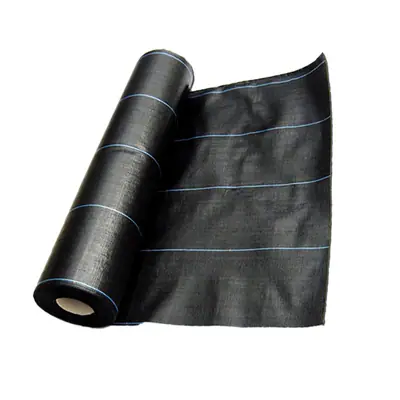
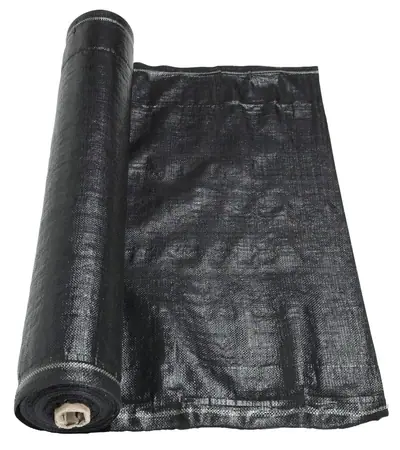
Silt fence is a woven polypropylene fabric, typically about 36 in (90 cm) wide, attached to wooden or steel stakes along the contour at the bottom of disturbed ground. It slows runoff so sediment settles out.
Typical installation:
- Dig a trench about 6 in (15 cm) deep along the contour.
- Set stakes on the downhill side, at most 6–8 ft (1.8–2.4 m) apart.
- Bury the bottom 6–8 in of fabric in the trench, toe it upslope and compact the backfill. An unburied fence lets water run underneath.
- Curve the ends uphill ("J-hooks") so water cannot flow around.
- Remove sediment when it reaches about one-third to one-half of the fence height.
Silt fence protects streams and storm drains from sediment; it does not stop the slope itself from eroding. It is often required on construction sites by local stormwater rules.
Erosion control bags and slope stabilization bags
Filled bags are one of the most flexible erosion control products, especially where water flow, waves or steep banks would tear blankets away.
Erosion control sandbags
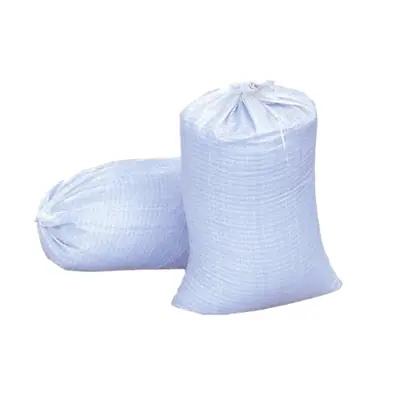
Woven polypropylene sandbags filled with sand, gravel or soil are used to:
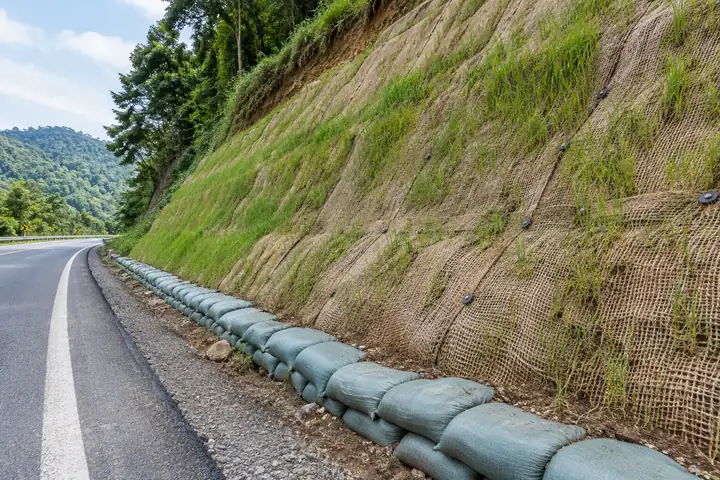
- Protect the toe of slopes and streambanks
- Build temporary berms and diversion dikes to steer runoff
- Make check dams in ditches and swales
- Weigh down blankets and covers
- Line outlets where pipes discharge
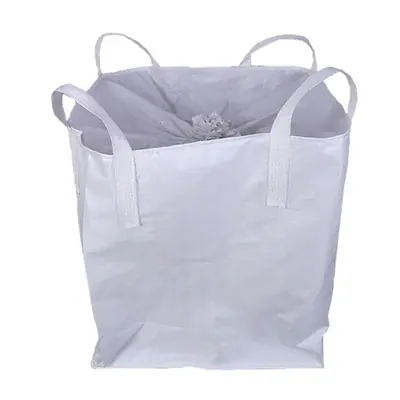
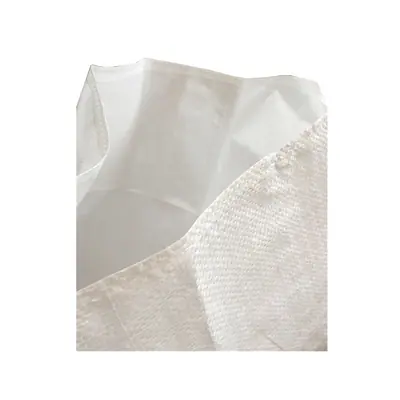
UV stabilization is essential. Uncoated, unstabilized PP bags can weaken within months in strong sun. For bags that will be exposed for a season or longer, specify UV-stabilized woven polypropylene, such as our UV Stabilized PP Woven Bag with Top Drawstring for Sand. For filling and stacking technique, see how to fill and stack sandbags, and browse woven sacks in PP Woven Sacks.
Vegetated slope stabilization bags
Slope stabilization bags are filled with soil and seed (or planted with live stakes) and stacked like bricks to form a stepped, green face on steep banks. Roots grow through the woven fabric and bind the structure. These bags need a fabric open enough for roots and water, and strong UV resistance. Our Commercial PP Woven Bag for Slope Stabilization is made for this kind of application.
Bulk bags for larger works
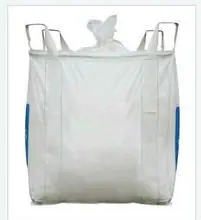
Where machines are available, filled 1-ton bulk bags make fast temporary barriers and toe protection on larger sites and riverbanks. Use UV-stabilized bags designed for outdoor storage, such as Outdoor UV Stabilized FIBC Bag Weather Resistant, and handle them with lifting equipment rated for the filled weight.
| Bag type | Filled weight (typical) | Use |
|---|---|---|
| Small sandbag, 14 × 26 in (35 × 65 cm) | 35–40 lb (16–18 kg) when filled half to two-thirds | Berms, check dams, weighting |
| Slope stabilization bag | Varies, often 25–40 kg | Vegetated walls and banks |
| Bulk bag, 1 ton | Up to the rated SWL | Toe protection, temporary dikes |
Geocell slope protection
Geocells are expandable honeycomb panels, usually HDPE, with cell depths of about 3–8 in (75–200 mm). Spread on a slope and anchored, each cell is filled with topsoil and seeded, or with gravel or concrete. The walls stop soil sliding downhill and hold fill on slopes too steep for blankets alone.
Use geocell slope protection where:
- Slopes are steep and long
- Topsoil must be held on a hard or smooth subgrade
- Channels need a permanent, vegetated or armored lining
Place a geotextile under the geocell where the subgrade soil could wash out through the cells; see geotextile fabric: woven vs non-woven for choosing it.
Choosing erosion control materials by situation
| Situation | Recommended approach |
|---|---|
| New lawn on gentle slope | Seed + straw blanket or hydromulch |
| Roadside cut, 2:1 | Seed + double-net straw or straw-coconut blanket |
| Steep bank, 1.5:1 to 1:1 | Coir blanket + live plants; geocell or vegetated bags for long slopes |
| Ditch or swale | Blanket rated for channel flow or TRM; check dams of filled bags |
| Construction site perimeter | Silt fence + stabilized entrance |
| Streambank toe | Rock, coir logs or UV-stabilized filled bags, with planting above |
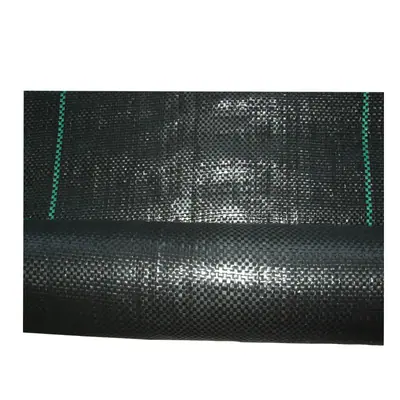
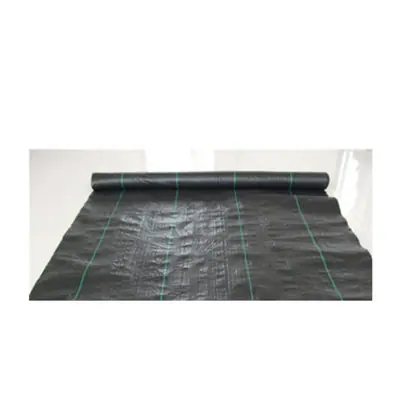
| Bare industrial ground, no vegetation planned | Heavy permeable woven mat, such as Industrial PP Weed Control Mat with Permeable, pinned and weighted |
For very small residential slopes, plants plus mulch may be all you need; see erosion control plants for slopes. For garden beds on slopes, the pinning advice in how to lay landscape fabric applies.
Working with erosion control suppliers
When requesting quotes from erosion control suppliers, give:
- Slope length, steepness (H:V) and soil type
- Expected water flow (sheet flow, concentrated flow, channel velocity if known)
- How long protection is needed and whether vegetation is planned
- Local regulatory requirements
- Quantities in m² or yd², or numbers of bags
EGP is a woven polypropylene manufacturer in Yantai, China. We supply UV-stabilized woven bags, bulk bags and woven fabrics to distributors and contractors who serve the erosion control market. We do not manufacture straw or coir blankets, geocells or turf reinforcement mats. Contact us with your bag or fabric specification.
Frequently asked questions
What is the best erosion control blanket for a steep slope?
For slopes steeper than about 2:1, use a straw-coconut or coir blanket with netting on both sides, stapled at 2.5–4 staples per square yard. Very steep or long slopes may need geocells, turf reinforcement mats or an engineered solution.
How long does a biodegradable erosion control blanket last?
Straw blankets typically last about a year, straw-coconut blends about 18–24 months, and coir blankets two to three years or more. Climate and moisture change these figures.
Are sandbags good for erosion control?
Yes, for toe protection, berms, check dams and weighting covers. Use UV-stabilized woven polypropylene bags for anything exposed longer than a few weeks, as unstabilized bags weaken in sunlight.
Does silt fence stop erosion?
Silt fence traps sediment carried by runoff, keeping it on site. It does not protect the slope from eroding; combine it with blankets, mulch or vegetation on the disturbed area.
What is the difference between erosion control netting and a blanket?
Netting is an open mesh that holds loose mulch or seed in place; a blanket is a mat of fibers that covers the soil itself. Blankets give much more protection on slopes.