Key takeaways
- A super sack is the same thing as an FIBC, bulk bag, ton bag, big bag or jumbo bag: a woven polypropylene container for 500–2,000 kg of dry product.
- A US "1 ton" bag is often rated 2,000 lb (907 kg); a metric "tonne bag" is 1,000 kg (2,205 lb) — check which one your label means.
- The price is driven by fabric weight, coating, liner, spouts and print, not by the name on the quote.
- Buy 5:1 single-trip bags for one-way shipments and 6:1 only if you run a real reuse program.
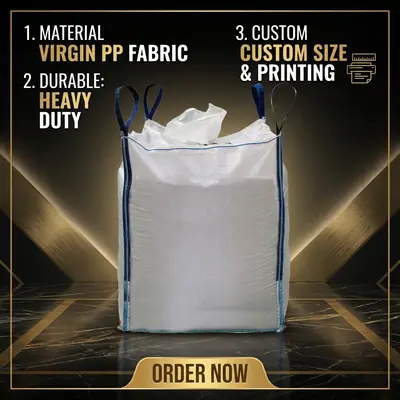
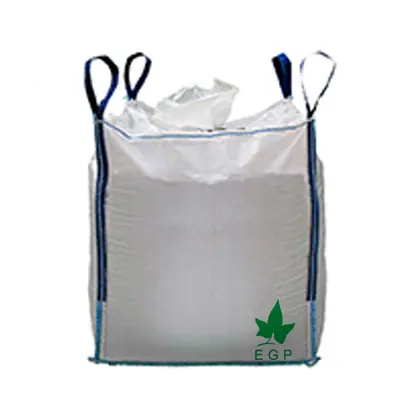
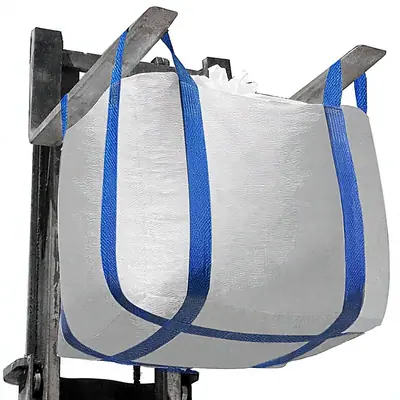
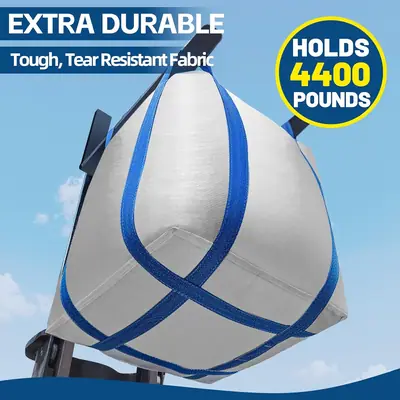
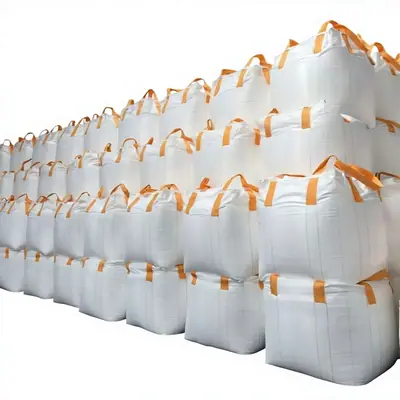
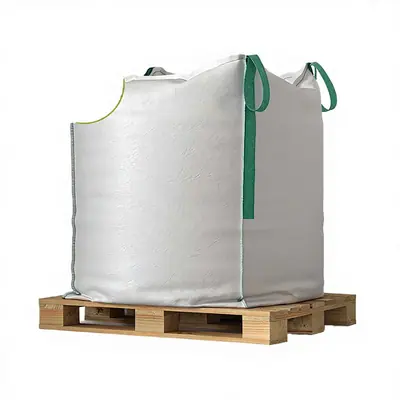
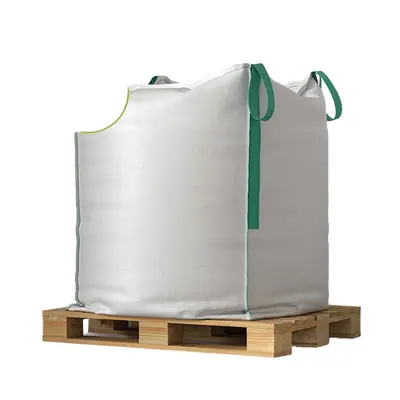
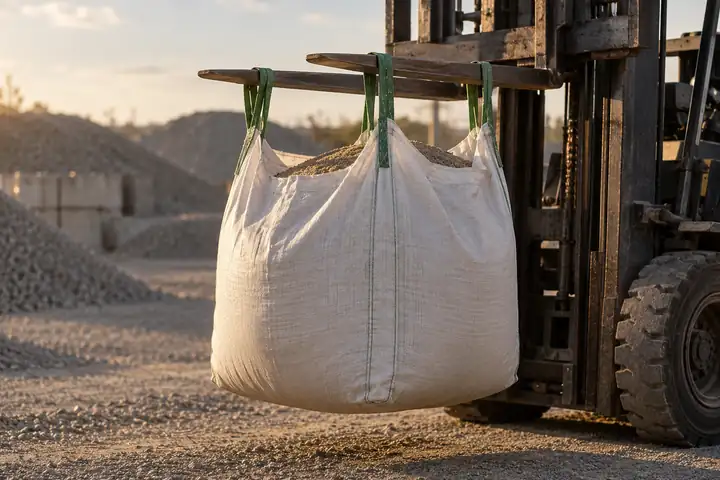
Super sacks are large woven polypropylene bags that hold roughly 500 to 2,000 kg (about 1,100 to 4,400 lb) of dry, flowable product and are lifted by forklift or crane using loops sewn into the top. "Super sack" started as a trade name and is now used generically; technically the bag is an FIBC (flexible intermediate bulk container), and the industry also calls it a bulk bag, ton bag, big bag or jumbo bag. If you are buying them, the name matters far less than the safe working load, the size and the top and bottom design.
This guide explains what you are actually buying when you order super sack bags, how to read the ratings, what the different sizes and options cost you in practice, and how to buy bulk bags wholesale without ending up with the cheapest bag that fails on the first lift. For a step-by-step specification method, see our guide to choosing an FIBC bulk bag.
Super sacks, bulk bags, ton bags, jumbo bags: is there any difference?
No. The names are regional and commercial, not technical:
| Name | Where you hear it | Same product? |
|---|---|---|
| Super sack / super sack bags | North America, farm and construction trades | Yes |
| Bulk bag | US and UK industry, distributors | Yes |
| FIBC | Standards, technical specs, chemicals | Yes (the formal term) |
| Ton bag / 1 ton bags | US, agriculture, aggregates | Yes, usually ~2,000 lb rating |
| Tonne bag | UK, Europe, Australia | Yes, usually 1,000 kg rating |
| Big bag | Europe, Latin America | Yes |
| Jumbo bags | Asia, export trade | Yes |
When you compare quotes from different suppliers, translate every listing back to the same specification: safe working load (SWL), safety factor, dimensions, fabric weight, coating, top, bottom, loops and liner. Two "one ton bags for sale" can be very different bags.
What is super sack material?
Almost every super sack is made from woven polypropylene (PP). PP resin is extruded into a thin film, slit into flat tapes, stretched to orient the molecules (which multiplies their tensile strength) and woven on circular or flat looms into fabric. The loops are woven PP webbing, and the bag is sewn with high-tenacity PP or polyester thread. Our upcoming article on how FIBC bulk bags are made walks through each step.
The material choices that matter to a buyer:
- Fabric weight (GSM). Bags rated 500–1,000 kg commonly use about 140–180 g/m² body fabric; 1,500–2,000 kg bags often use 180–220 g/m² or more. Heavier fabric costs more but holds its shape and resists abrasion.
- Coated or uncoated. A thin PP lamination (often 20–30 g/m²) stops fine powder sifting through the weave and slows moisture. Uncoated fabric breathes, which is what you want for firewood, potatoes or damp aggregates.
- UV stabilization. Polypropylene degrades in sunlight. A UV additive is essential for any bag stored outdoors; without it, a bag can lose a large part of its strength in a single summer.
- Virgin vs. recycled resin. Load-bearing fabric and loops should be virgin PP. Recycled content lowers cost but makes strength less predictable.
- Liner. A polyethylene liner (a separate material from the PP shell) is added for moisture-sensitive, fine or food products. See our bulk bag liners guide.
How much does a super sack hold? Ton bags vs tonne bags
This is the most common source of confusion with 1 ton bags:
- US short ton = 2,000 lb = 907 kg
- Metric tonne = 1,000 kg = 2,205 lb
A bag sold in the US as a "1 ton bag" is often rated at 2,000 lb SWL. A European or Asian "tonne bag" is usually 1,000 kg SWL. The difference is only about 10%, but it is the difference between filling inside or outside the rating. Always read the SWL on the label, not the product name.
Volume is a separate question. The same 35 × 35 × 50 in (about 90 × 90 × 127 cm) bag holds roughly 1 m³ (35 ft³): about 1,500 kg of sand, about 750 kg of wheat, or about 300 kg of wood chips. So a bag can be "full" long before it reaches its weight limit, or over its weight limit while it still looks half empty. Our bulk bag dimensions calculator shows how to size a bag from bulk density.
Typical super sack sizes and ratings
| Size (in) | Size (cm) | Approx. volume | Typical SWL | Common use |
|---|---|---|---|---|
| 35 × 35 × 35 | 90 × 90 × 90 | 0.73 m³ / 25 ft³ | 1,000–1,500 kg | Sand, cement, dense minerals |
| 35 × 35 × 43 | 90 × 90 × 110 | 0.89 m³ / 31 ft³ | 1,000 kg | Fertilizer, salt |
| 35 × 35 × 47 | 90 × 90 × 120 | 0.97 m³ / 34 ft³ | 1,000 kg | General purpose, feed, chemicals |
| 35 × 35 × 59 | 90 × 90 × 150 | 1.22 m³ / 43 ft³ | 1,000 kg | Grain, pellets, plastics |
| 37 × 37 × 63 | 95 × 95 × 160 | 1.44 m³ / 51 ft³ | 500–1,000 kg | Light products, wood chips |
| 26 × 26 × 30 | 65 × 65 × 75 | 0.32 m³ / 11 ft³ | 250–500 kg | Small bulk bags for retail and trial lots |
Volumes are geometric; a filled bag bulges, so confirm with a trial fill.
What are small bulk bags used for?
Small bulk bags (roughly 250–500 kg, or 500–1,000 lb) fill the gap between 25 kg sacks and full tonne bags. They are used for:
- Dense products such as steel shot, metal powders or heavy minerals, where a full-size bag would exceed SWL long before it is full;
- Retail and landscaping — half-ton bags of gravel, mulch or soil that a small truck can carry;
- Samples and trial lots for new customers;
- Sites with light forklifts or manual pallet trucks.
The smaller footprint also suits narrow aisles and smaller hoppers. Our Durable Polypropylene Jumbo Bags 1000kg 500kg Bulk is offered in both 500 kg and 1,000 kg versions.
Which super sack design do you need?
Most buyers choose from four standard combinations:
| Design | Top | Bottom | Best for |
|---|---|---|---|
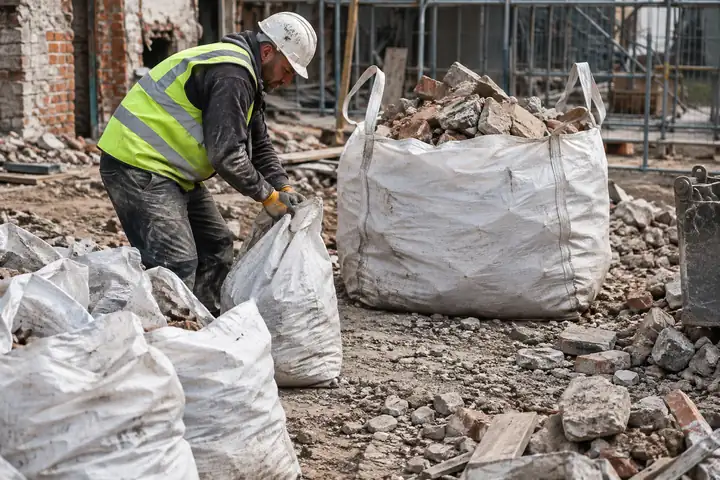
| Open top, flat bottom | Fully open | Flat | Aggregates, firewood, scrap, demolition waste |
| Duffle top, flat bottom | Skirt that ties closed | Flat | Feed, fertilizer, products that must stay covered |
| Spout top, spout bottom | Filling spout | Discharge spout | Powders and granules on filling and discharge lines |
| Duffle top, spout bottom | Skirt | Discharge spout | Hand or grab filling, controlled discharge into a hopper |
For cement and other dense powders, a coated U-panel bag such as our Super Sack PP Woven Flat Bottom Jumbo FIBC Bag Cement is a common starting point. For sand and aggregates, the FIBC Bulk Jumbo Big Bag 1 Ton PP Woven Food Grade Super covers the typical 1-tonne open-top requirement. For heavy loads up to 2,000 kg, see the FIBC Bulk Bags Holds 4400 Lbs Heavy Duty 210-Gallon Woven. Dedicated articles go deeper on baffle bags (Q-bags) and bulk bags for sand, gravel and aggregates.
If your product is combustible or handled near flammable solvents, the bag type (A, B, C or D) matters more than any of the above. See types of FIBC bags.
Are super sacks reusable?
Only if they were designed for it. Standard bulk bags are 5:1 single-trip bags: they passed a top-lift test at five times their SWL, but they are intended for one fill and one discharge. Reusable bulk bags are rated 6:1 and are meant to be cleaned, inspected and refilled within a documented program. Our 5:1 vs 6:1 safety factor guide explains the testing under ISO 21898, and our FIBC recycling and reuse guide covers how reuse and end-of-life programs work.
Where to find bulk bags for sale
There are three realistic sources of super sacks for sale:
- Local packaging distributors and farm or builders' merchants. Best for a handful of bags or a pallet, delivered quickly. You pay a distributor margin and choose from what is in stock.
- Used and reconditioned bag dealers. Low cost, but you rarely know the bag's history, UV exposure or previous contents. Never use a second-hand single-trip bag for lifting over people or for food.
- Manufacturers, factory direct. The right route for bulk bags wholesale: container quantities, custom sizes, your print, your spout dimensions. Lead time is longer, and orders are subject to a minimum order quantity, typically in the hundreds or thousands of bags depending on the design.
If you resell bags to farms, landscapers or contractors, factory direct gives you a consistent specification under your own brand. Our article on bulk bag suppliers in the USA, India and China compares the options honestly, and our import checklist covers the paperwork.
How to buy cheap bulk bags without buying bad ones
"Cheap bulk bags" usually means one of three things, and only one of them is a real saving:
- A right-sized specification. If you are paying for 200 g/m² coated fabric, a liner and two spouts to ship gravel, a 160 g/m² uncoated open-top bag can be a perfectly safe and much cheaper choice. This is a genuine saving.
- Underweight or recycled fabric sold at the same SWL. The bag may pass a visual check but not a top-lift test. This is not a saving.
- Mislabeled ratings — a bag labeled 1,000 kg 5:1 that was never tested. Ask for the supplier's test report for that design.
To keep costs down legitimately: standardize on one or two sizes, order full container loads, keep printing to one or two colors, and drop options you do not use (spouts, liners, document pouches).
How super sacks are shipped and stored
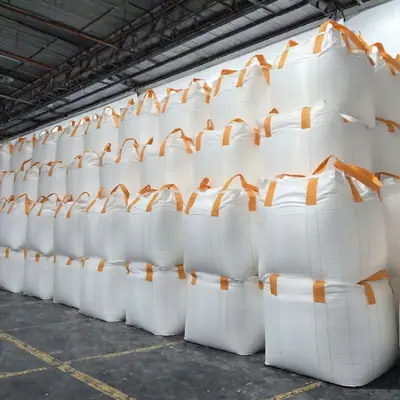
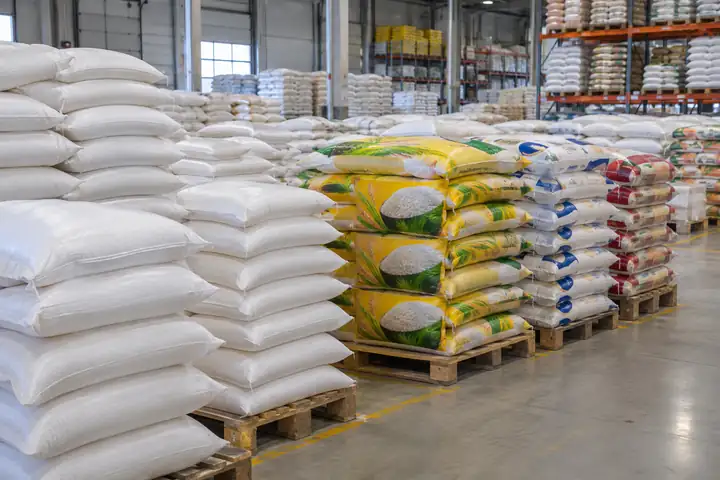
Empty bags are folded flat, compressed into bales of typically 50–200 pieces and wrapped or strapped onto pallets, so a container of empty bags carries a very large number of units. Store them indoors, out of sunlight, and away from heat sources. Filled bags are usually stacked no more than two high, on pallets, with the label facing out. Rotate stock so older bags are used first, especially outdoor-storage grades.
Buying super sacks factory direct from EGP
Yantai Evergreen Packaging (EGP) manufactures woven PP bulk bags in Yantai, Shandong, and has supplied buyers through Alibaba.com for 24 years. We make custom sizes, tops, bottoms, loops, liners and printing for importers, distributors, farms and contractors, with typical replies within 8 hours. Browse our FIBC Bulk Bags range or send your product, fill weight and target size for a drawing and quotation.
Frequently asked questions
What is the difference between a super sack and a bulk bag?
There is none in practice. "Super sack" began as a trade name and is now used generically for any FIBC bulk bag. What matters is the specification: safe working load, safety factor, size, fabric, top, bottom and liner.
How much weight can a 1 ton bag hold?
A US "1 ton" bag is commonly rated at 2,000 lb (907 kg), while a metric tonne bag is rated at 1,000 kg (2,205 lb). The safe working load on the bag's label is the limit; never fill above it, even if the bag looks only partly full.
What size are super sacks for sale usually?
The most common stock size is about 35 × 35 × 40–50 in (90 × 90 × 100–127 cm), holding around 1 m³ (35 ft³). Taller bags suit light products such as grain or wood chips, and shorter bags suit dense products such as sand or cement.
Are super sacks waterproof?
Not fully. Coated fabric slows moisture and stops dust sifting, but seams and the top are not watertight. For moisture-sensitive products, add a polyethylene liner and store bags under cover.
Can I buy bulk bags wholesale with my own logo?
Yes. Manufacturers print one or more sides of the bag with your logo, product name, SWL, safety factor and handling instructions. Custom printing is normally subject to a minimum order quantity per design.